
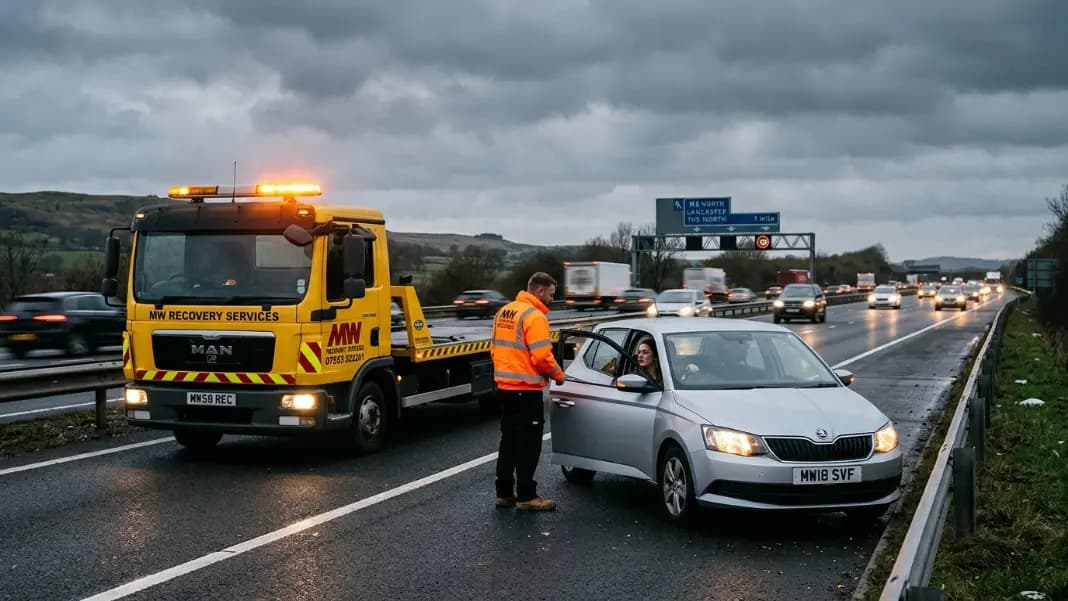
Breakdown Recovery vs Breakdown Cover: What Is the Difference?
Breakdown cover and breakdown recovery are not the same thing. One is a financial product, the other is the service. Understanding the difference saves you money and means you always know what to do when your car stops.
Table of Contents
The words breakdown cover and breakdown recovery get used interchangeably, and that causes real problems. Drivers assume they have cover when they do not. Others pay for annual membership for years, then call a local recovery company directly when something goes wrong because it is faster. Some people are stranded on the M60 at midnight trying to work out whether their policy covers motorway recovery or only roadside faults.
These are not hypothetical problems. We deal with the consequences of this confusion every week at MW Recovery Services. So this article is going to explain both terms clearly, how they relate to each other, and which one actually matters when your car stops at the side of the road.
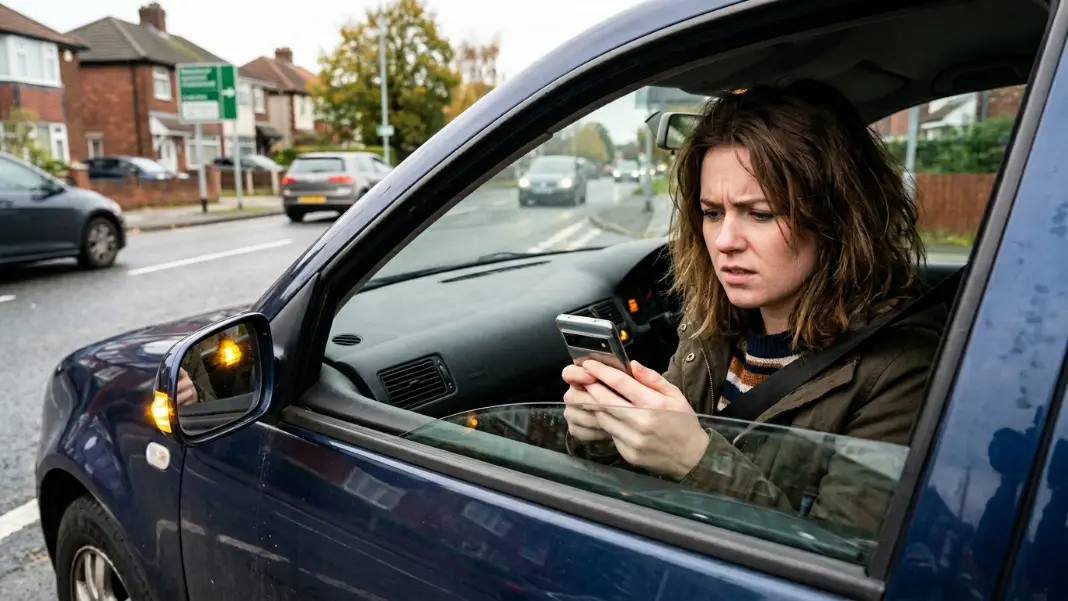
What Is Breakdown Cover?
Breakdown cover is an insurance product. You pay a monthly or annual premium to a provider, and in exchange that provider agrees to arrange assistance if your vehicle breaks down. The AA, RAC, and Green Flag are the three biggest names in the UK. There are smaller operators too, including Start Rescue, Britannia Rescue, and a number of bank-account-linked products.
What you are buying is a contract. The contract says: if your car breaks down, call us, and we will send someone. The level of cover you choose determines what that someone will actually do.
Roadside-only cover means a technician will attend and try to fix the fault at the roadside. If they cannot fix it within a reasonable time, they will typically tow you to a nearby garage. Not necessarily the garage you want, and not necessarily home.
National cover adds home start (if you break down on your driveway or close to home), onward travel assistance, and recovery to any UK destination. European cover extends this abroad.
Annual premiums vary considerably. Basic roadside cover from the big providers runs from around £50 to £90 per year when bought direct. National cover with home start and onward travel is typically £100 to £200. Add-ons for extra vehicles or European cover push it higher.
One thing worth checking before you buy a standalone policy: breakdown cover is included in more products than most people realise. Some packaged bank accounts include it as standard. Many car insurance policies offer it as a bolt-on. Some credit card products and employee benefits packages include it. If you already have it somewhere, you do not need to pay for it again.
What Is Breakdown Recovery?
Breakdown recovery is the actual service. It is the vehicle that turns up, the technician who assesses your car, the jump start, the tyre change, or the tow to a workshop. It is what you experience when something goes wrong.
The confusion arises because the word recovery gets used in two ways. Broadly, breakdown recovery covers everything from getting your car started at the roadside through to loading it onto a flatbed and transporting it to a garage. Specifically, vehicle recovery refers to the transport element, as distinct from the roadside repair attempt.
When the AA or RAC sends someone to your car, they are providing roadside assistance and, if needed, vehicle recovery. Your breakdown cover is the product that funds this. The service and the financial product are not the same thing.
Recovery companies also operate independently of the big cover providers. A company like MW Recovery Services in Salford provides breakdown recovery directly to drivers across Greater Manchester. You call, get a quote, we come out. Your cover does not come into it at all.
Equipment matters more than most people think when comparing recovery options. There is a significant difference between a company that uses proper flatbed tow trucks and one that uses rope tows or rigid A-frames. Flatbed is the correct recovery method for automatic gearbox vehicles, all-wheel-drive cars, electric vehicles, and any car with significant mechanical damage. Towing an automatic on its driven wheels causes transmission damage. If a recovery company does not own flatbed trucks, that is worth knowing before you agree to a callout.
How Breakdown Cover and Recovery Work Together
The relationship between the two is straightforward once you understand it: cover is the product, recovery is what the product buys.
When you break down and you have breakdown cover, you call your provider. They dispatch a recovery operator, either one of their own drivers or a contracted local company. The recovery company arrives, provides the roadside assistance or vehicle recovery, and bills the cover provider. You do not pay on the day, because your cover has already paid for it through your premium.
When you break down and you do not have cover, you call a recovery company directly. They give you a quote. You agree or you walk away. They come out and do the same job. You pay on the day.
The physical experience of both options can be identical. The same flatbed truck, the same technician, the same service. The financial arrangement is completely different.
Do You Need Breakdown Cover to Get Recovery?
No. This is the part of the picture that a lot of drivers simply do not know, and it changes your options significantly.
You can call any recovery company directly, with no membership and no prior arrangement, and they will attend a callout. You get a price quoted over the phone, you agree it, a driver comes out. It is a straightforward transaction.
At MW Recovery Services, a significant portion of our callouts are from drivers with no cover at all. Someone's car has broken down, they need help, they searched for a recovery company near them, and they called. The process takes a couple of minutes on the phone. No policy number to give, no waiting in a queue while an automated system verifies your membership, no checking whether your particular fault type is covered under your specific policy tier.
What does it cost? For a typical Manchester or Greater Manchester callout, a roadside repair or local tow runs from around £50. Motorway recovery starts around £60 to £80. The price is fixed before we move, not estimated. See our pricing page for more detail on what typical jobs cost.
The comparison to annual cover: if you break down once every three or four years, your average annual cost of recovery at the pay-per-job rate is £15 to £30. Most standalone breakdown policies cost more than that. For a driver with a newer, reliable car who rarely breaks down, membership is not automatically the right financial decision.
When Breakdown Cover Makes Financial Sense
For some drivers, an annual policy is clearly the right product.
Older cars break down more often. A car over seven or eight years old is statistically more likely to develop faults, particularly battery issues, cooling problems, and clutch wear. If your car has already broken down twice in two years, annual cover at £80 to £150 is almost certainly cheaper than paying per callout.
High-mileage drivers face greater risk. More miles means more mechanical stress, more tyre wear, and more time on motorways where a breakdown is more disruptive and expensive to resolve. If you cover 25,000 miles or more per year, the probability of needing recovery at some point is high enough that annual cover earns its keep.
Families with young children, elderly passengers, or medical requirements should consider cover for the onward travel provisions as much as for the recovery itself. Being stranded 200 miles from home with children is a qualitatively worse situation than breaking down near home, and national cover's hotel and hire car provisions are worth something beyond pure financial calculation.
European travel is one situation where pay-per-job does not work. Most local recovery companies do not operate in Europe. If you regularly drive abroad, European breakdown cover is not optional.
When Paying Per Callout Works Out Cheaper
If you have had one breakdown in the past five years, or none at all, it is worth doing the maths before renewing an annual policy.
New cars under three years old are unlikely to break down from mechanical failure. The most common callouts on newer vehicles are flat batteries (a door left open, or the car not driven for two weeks) and punctures. Neither requires specialist equipment or long-distance transport. A local company can handle both in 30 to 40 minutes.
One callout every four years at £70 per job works out at £17.50 per year on average. Most standalone breakdown policies cost more than that.
It is also worth checking whether you already have cover. Packaged bank accounts from Lloyds, Natwest, Halifax, and others include breakdown cover as standard. Check the terms of your current account before buying a policy you may already own.
Response times are another factor. National providers prioritise based on their own criteria. A local recovery company covering a defined area can often reach you faster than a national operator dispatching from a regional hub. We regularly reach callouts in central Manchester and Salford in under 30 minutes. That is faster than the average response time published by the big providers.
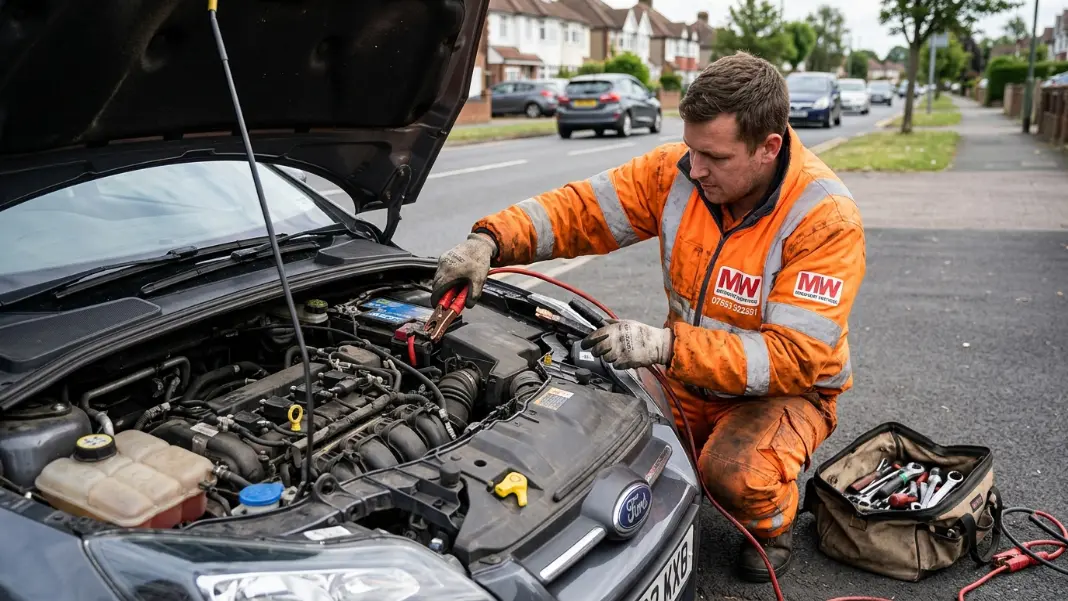
What Good Recovery Actually Looks Like
Whether you are using a cover provider or calling a local company directly, there are a few things that separate a good recovery service from a poor one.
Flatbed trucks. The standard recovery method for most vehicles should be flatbed. If a company is going to wheel-lift your automatic or tow your EV on its wheels, they are going to cause damage. Ask before you agree.
Fixed pricing. The quote you get on the phone should be what you pay. Fuel surcharges, additional scene charges, and variable billing after the fact are not acceptable. MW Recovery Services quotes a fixed price and that price does not change when the driver arrives.
Real response times. A company that says "we'll be there" without a time estimate either does not know where its drivers are or is not being straight with you. We give realistic times based on traffic from our Salford base, not aspirational targets.
Documentation. You should receive a receipt that covers the date, callout time, arrival time, vehicle registration, fault description, and work carried out. This matters for insurance purposes, warranty claims, and your own records.
Local knowledge. A Manchester company knows Manchester roads. We know which M60 junctions are accessible quickly, where Trafford Park estate roads narrow, and how to reach less obvious locations. That knowledge translates into faster arrival in practice.
Frequently Asked Questions
What is the difference between breakdown cover and breakdown recovery?
Breakdown cover is a financial product (insurance) you pay for in advance, provided by companies like the AA or RAC. Breakdown recovery is the physical service of attending a broken-down vehicle and either fixing it or transporting it. Cover pays for recovery. They are separate things.
Can I get breakdown recovery without a membership?
Yes. Any recovery company, including MW Recovery Services, will attend a callout with no membership required. You pay for the job at a fixed price agreed before the driver is dispatched. Call 07553 322281 for an immediate quote.
How much does breakdown recovery cost without cover in Manchester?
Local callouts start from around £50. Motorway recovery starts from around £60. Prices are fixed and agreed before dispatch. See our pricing page for full details.
Is roadside assistance the same as breakdown recovery?
Roadside assistance is the part of breakdown recovery where a technician attempts to fix your vehicle at the scene. If the vehicle cannot be fixed there, it is then recovered by truck. Many companies use both terms together, but roadside assistance refers specifically to the on-site repair attempt. See our guide on roadside assistance in Manchester.
Does breakdown cover guarantee a fast response time?
No. Response times vary based on how busy the provider is, your location, and time of day. Peak periods and motorway incidents can push national provider response times well past an hour. A local recovery company covering a defined area can often give more accurate and faster arrival estimates.
The distinction between breakdown cover and breakdown recovery comes down to this: one is a financial arrangement, the other is a service. Both have their place, and understanding the difference means you can make a better decision about whether annual membership is worth it for your situation.
If your car breaks down in Manchester and you need help right now, call MW Recovery Services on 07553 322281. Flatbed trucks, fixed pricing, 24 hours a day. See our breakdown recovery service for more, or read our guide on getting car recovery without breakdown cover.
Need Car Recovery in Manchester?
MW Recovery provides fast, professional breakdown recovery and roadside assistance across all of Greater Manchester. One call and we are on our way.