
Car Overheating? Causes, Symptoms & What To Do (UK Guide 2026)
Car overheating? Learn the most common causes from coolant leaks to blown head gaskets, spot the warning signs early, and know exactly what to do to avoid engine damage. UK guide from MW Recovery Manchester.
Table of Contents
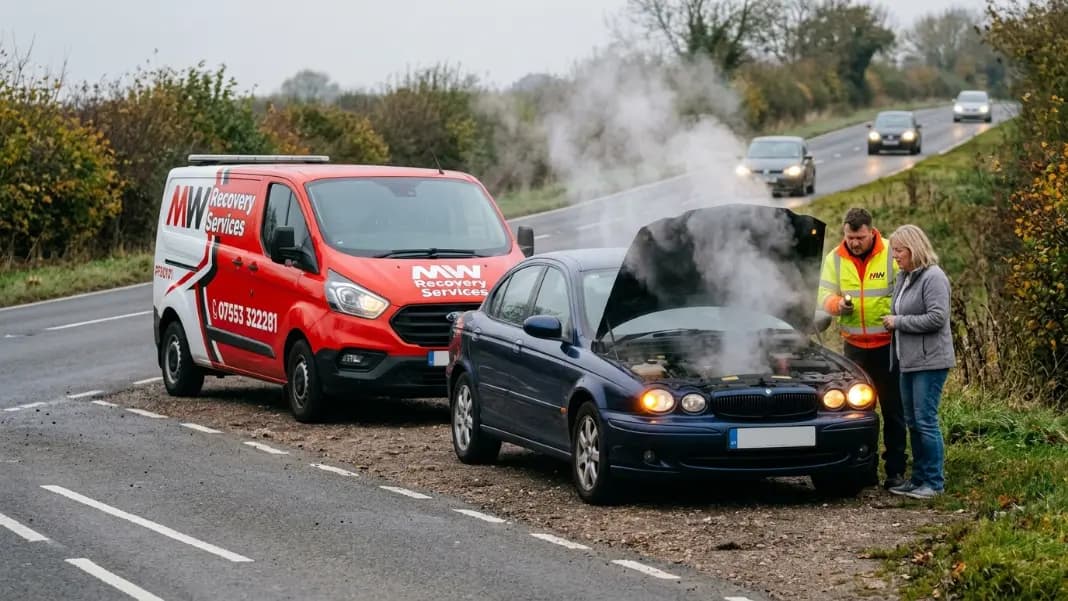
Your temperature gauge is climbing. A warning light has come on. You can see steam rising from under the bonnet. Car overheating is one of those situations where doing the wrong thing in the next five minutes can turn a recoverable problem into a destroyed engine.
This guide covers everything you need to know: why your car is overheating, what the symptoms look like, what to do right now if it happens, and when you need professional recovery. We cover Greater Manchester 24 hours a day, and overheating callouts are one of the most common jobs we attend, particularly in slow-moving traffic and on motorways in summer.
Why Is My Car Overheating?
Your car engine produces an enormous amount of heat when it runs. The cooling system exists to remove that heat and keep the engine within a safe operating temperature range. When the cooling system cannot keep up, engine temperature rises beyond safe limits and the engine overheats.
The cooling system works like this: coolant fluid circulates through channels in the engine block, absorbing heat as it goes. It then passes through the radiator at the front of the car, where airflow cools the fluid back down before it circulates again. A thermostat regulates the flow, a water pump keeps it moving, and a radiator fan assists cooling when the car is stationary and there is no airflow from driving.
If any part of this system fails, heat builds up faster than it can be removed. Car engine overheating follows quickly. The reasons for car overheating almost always come back to one of the core components in this system.
Common Causes of Car Overheating
These are the most frequent reasons for car overheating that our team encounters on callouts across Greater Manchester:
- Low or empty coolant. Coolant leaks are the most common cause of overheating. The coolant level drops below the minimum, there is not enough fluid to absorb engine heat, and the temperature rises. Coolant leaks can be slow and gradual, meaning you may not notice until the car starts overheating.
- Blown head gasket. The head gasket seals the engine block and cylinder head. When it fails, coolant can leak into the engine or exhaust gases can enter the cooling system. A blown head gasket often causes sudden and severe overheating. White smoke from the exhaust and a milky residue inside the oil filler cap are warning signs.
- Failed water pump. The water pump circulates coolant through the system. When it fails, coolant stops moving and the engine heats up rapidly. Water pump failure can happen suddenly or deteriorate over time.
- Blocked or leaking radiator. The radiator can become blocked with debris or corrosion over time, reducing its ability to cool the fluid. Physical damage from stone chips or minor impacts can also cause leaks.
- Faulty thermostat. The thermostat controls when coolant flows into the radiator. If it sticks closed, coolant cannot reach the radiator and engine temperature climbs quickly. A thermostat that sticks open causes different problems but a stuck-closed thermostat almost always leads to overheating.
- Failed radiator fan. When the car is moving, airflow through the radiator cools the coolant. When stationary, a fan takes over. If the fan fails, the cooling system loses much of its capacity when the car is not moving, which is why overheating in traffic is so common.
- Coolant hose failure. Rubber hoses connect the engine to the radiator and other components. Over time they harden, crack, or split. A burst hose can release all the coolant in seconds, causing near-immediate overheating.
- Low engine oil. Engine oil plays a secondary cooling role, particularly in the upper part of the engine. Very low oil levels increase friction and heat. An engine running low on oil can overheat even if the cooling system is working correctly.
Signs Your Car Is Overheating
Overheating car symptoms often appear gradually before the situation becomes serious. Knowing what to watch for gives you time to react before damage is done.
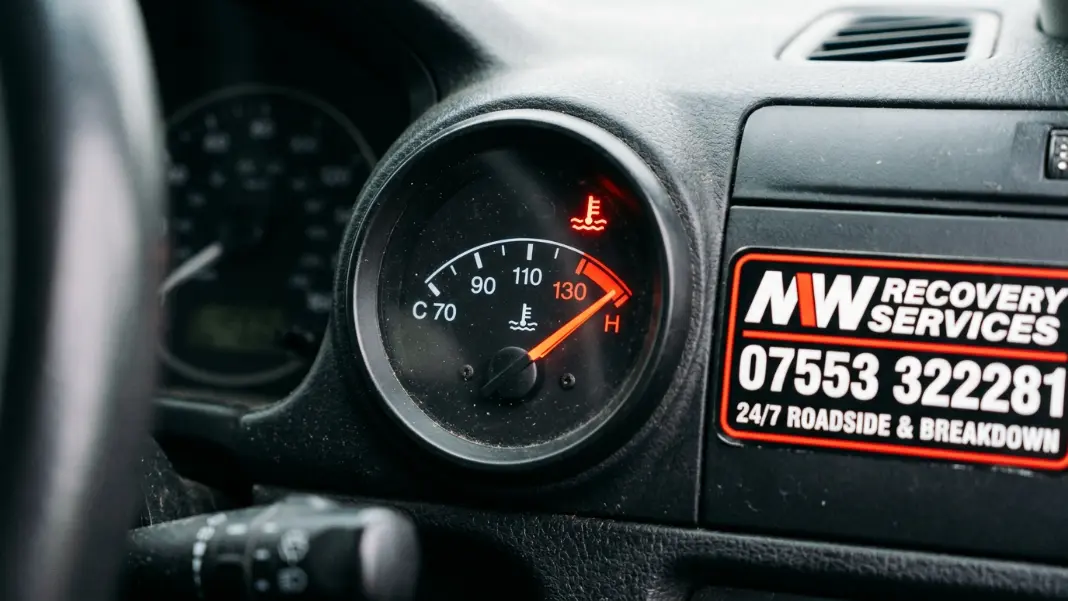
- Temperature gauge rising. This is the clearest warning. Most cars have a temperature gauge on the dashboard. Normal running temperature is usually around the middle of the gauge. If the needle moves toward the red section or the red zone, the engine is getting too hot. Do not ignore this.
- Temperature warning light. Many modern cars replace the gauge with a warning light, usually a thermometer symbol or a red light marked TEMP. If this comes on, treat it as an emergency and act immediately.
- Steam from the bonnet. Visible steam or smoke rising from under the bonnet means coolant has reached boiling point and is escaping as steam. Pull over immediately.
- Sweet smell inside the car. Coolant has a distinctive sweet smell. If you notice this inside the car, particularly with the heater on, coolant may be leaking inside the heating system.
- Reduced engine power. Some engines enter a protective reduced-power mode when they overheat to limit damage. If the car suddenly feels sluggish or lacks power without an obvious cause, check the temperature gauge.
- Heater blowing cold air. If the heater suddenly stops producing warm air, it can indicate low coolant. The heater uses the same coolant circuit as the engine, and if coolant is low, there is not enough reaching the heater matrix.
- Thumping or knocking from the engine. Extreme overheating can cause metal components to expand beyond their tolerances, leading to unusual noises from the engine. If you hear knocking alongside rising temperature, stop driving immediately.
Car Overheating When Idle or in Traffic
One of the most common patterns our callout team sees is a car that overheats when idle or stuck in slow traffic but seems fine when moving on faster roads. This pattern almost always points to the radiator fan.
When you are driving at speed, airflow passes through the radiator grille and cools the coolant naturally. When you are stationary or moving slowly, there is no natural airflow and the electric radiator fan has to do all the work. If the fan has failed or is running slowly due to a faulty motor or a blown fuse, the radiator cannot cool the coolant at low speeds.
Car overheating in traffic causes:
- Failed electric radiator fan motor
- Blown fuse for the fan circuit
- Faulty fan temperature sensor that is not triggering the fan to come on
- Coolant low enough to cause problems only under the extra heat of stop-start driving
If your car only overheats in traffic but is fine on the motorway, the most immediate temporary measure is to turn the heater on full blast. This sounds counterintuitive but the heater draws heat from the coolant, reducing engine temperature slightly. Turn the blower to maximum on hot air. This will not fix the underlying problem but it may prevent damage long enough to reach a safe place to stop.
Car Overheating But Coolant Is Full
This is one of the questions we hear most often, and it confuses a lot of drivers. The coolant reservoir reads full, so why is the car overheating?
The answer is that coolant level is not the only thing that matters. Car overheating when coolant is full usually has one of these causes:
- Blown head gasket. Exhaust gases entering the cooling system displace coolant and create air pockets. These air pockets stop the coolant from circulating properly even though the reservoir looks full. A head gasket tester from any motor factors can confirm this in minutes. Look for bubbling in the coolant reservoir when the engine runs, which indicates combustion gases entering the system.
- Blocked radiator. If the radiator is internally corroded or blocked, coolant cannot flow through it efficiently. The reservoir is full but the coolant is not being cooled before it recirculates.
- Failed water pump. Coolant is present in the system but the pump is not moving it. A failed water pump impeller can spin without actually pumping fluid, particularly if the impeller blades have corroded away from the shaft.
- Air lock in the cooling system. Air trapped in the system prevents proper coolant circulation even when there is plenty of coolant present. This often happens after work has been done on the cooling system if it was not bled correctly.
- Faulty temperature sensor. In some cases the car is not actually overheating. A faulty coolant temperature sensor sends incorrect readings to the gauge, making it appear the engine is overheating when it is not. Check whether the engine feels or smells hot before assuming the reading is accurate.
Car overheating but full of coolant is often a more serious diagnosis than simple low coolant. It usually means a component has failed rather than a fluid needing topping up. Get the car to a workshop for proper diagnosis.
What To Do If Your Car Is Overheating
This is the most important section. The actions you take in the next few minutes determine whether you have a repair bill or a write-off.
- Do not panic. React calmly and quickly. You have a short window to act before serious damage occurs. Stay focused.
- Turn the heater on full immediately. Switch the heater to maximum heat and maximum fan speed. This draws heat from the engine coolant into the cabin and can reduce engine temperature by several degrees while you find somewhere safe to stop.
- Turn off the air conditioning. Air conditioning increases the load on the engine and generates additional heat. Switch it off immediately.
- Find somewhere safe to pull over as quickly as possible. Do not keep driving hoping the problem will resolve itself. The longer an overheating engine runs, the more damage accumulates. A warped cylinder head, a blown head gasket, or a seized engine are all possible outcomes of driving an overheating car for too long.
- Turn the engine off. Once stopped safely, switch the engine off. Do not switch to neutral and leave the engine idling. Turning it off removes the heat source and lets the cooling system work without additional heat input.
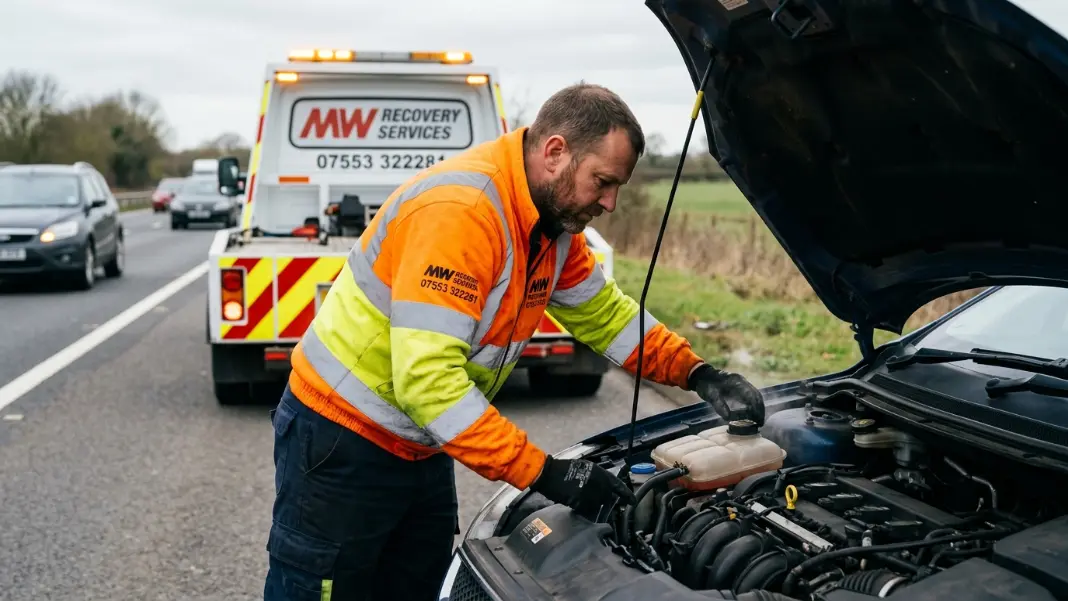
- Do not open the bonnet immediately. Wait at least ten minutes before opening the bonnet. Steam under pressure can cause serious burns. Once you open it, approach the coolant reservoir and radiator cap with extreme caution. Never open a hot radiator cap.
- Do not add cold water to a hot engine. Pouring cold water onto a hot engine can cause thermal shock, cracking the engine block or cylinder head. If you add water, use warm water and add it slowly.
- Call for recovery. If the temperature warning light came on, if you saw steam, or if the gauge reached the red zone, do not attempt to restart the engine and drive on. Call a recovery service. Driving further risks catastrophic engine failure that may render the car uneconomical to repair.
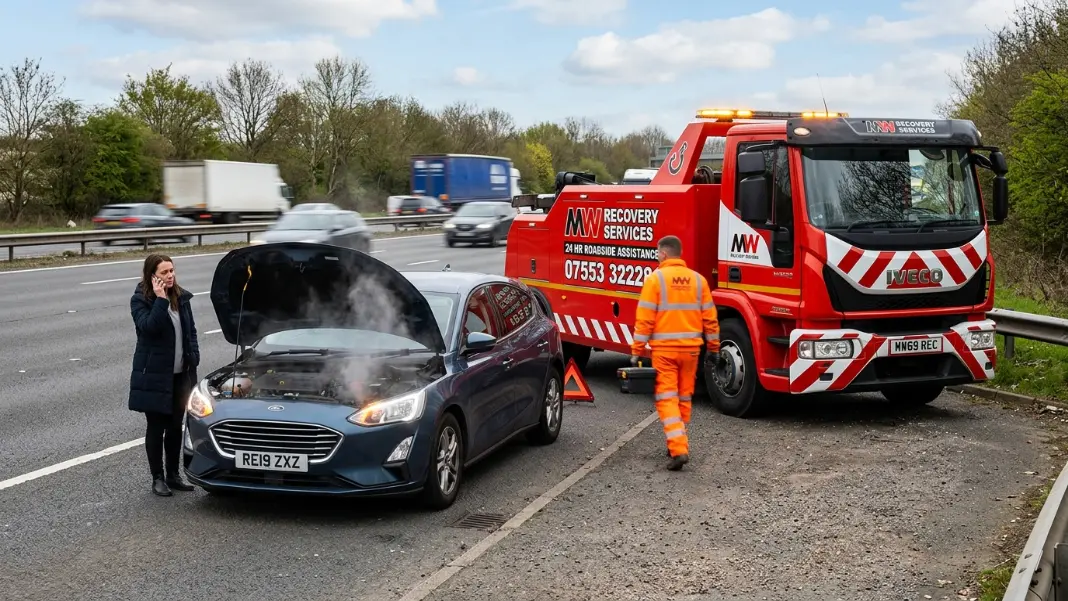
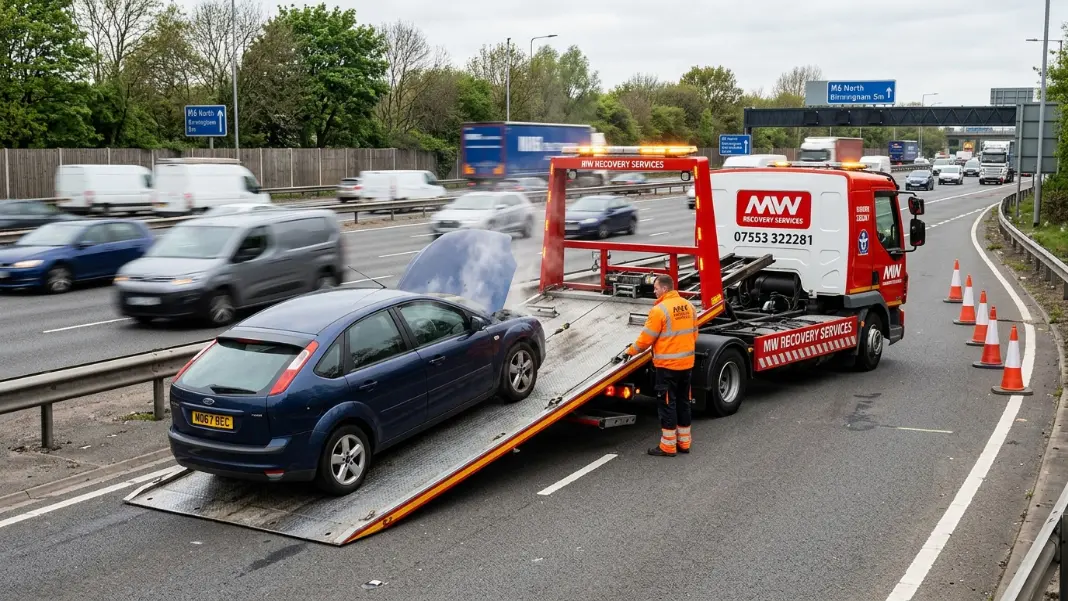
If you are on the motorway, get onto the hard shoulder safely, switch on your hazard lights, and exit the vehicle via the left door. Stand behind the barrier and call for recovery. Motorway overheating is a motorway recovery job, not something to attempt to resolve yourself at the roadside.
Our team covers all of Greater Manchester 24 hours a day. Call us on 07553 322281 for immediate recovery. We attend motorways, dual carriageways, and all local roads across the region. Our 24/7 emergency car recovery service means help is always available regardless of the time.
Temporary Fix for Overheating Car
These measures can reduce temperature enough to get you safely off a dangerous road, but none of them fix the underlying problem. Treat them as emergency measures only, not solutions.
- Heater on full. As covered above, this draws heat from the coolant into the cabin. Effective as a short-term measure but uncomfortable in summer.
- Pull over and let the engine cool. Turning the engine off and waiting 20 to 30 minutes allows the temperature to drop significantly. After this time you may be able to restart and drive a short distance to a safe location.
- Top up coolant when cool. If the engine has cooled completely and the coolant level is low, top it up with the correct coolant or with clean water as an emergency measure. This only helps if low coolant was the cause. If the system has a leak, the coolant will escape again quickly.
- Drive with caution and watch the gauge. If you must drive after a cooling-down period, keep the heater on, drive slowly, and watch the temperature gauge constantly. Stop immediately if it starts rising again.
None of these measures address the reason the car overheated. The only way to fix the problem properly is to have the cooling system inspected and the faulty component repaired or replaced.
Can You Drive an Overheating Car?
This is a question we hear often from drivers who are trying to reach home or a garage before calling for help. The honest answer is: it depends, but the risk is high and the potential cost of getting it wrong is severe.
If the temperature gauge has moved into the red, or if you have seen steam, you should not continue driving. Driving an overheating car risks:
- Warped cylinder head. The cylinder head is made of aluminium, which expands when heated. Severe overheating causes it to warp out of shape. A warped cylinder head requires machining or replacement. This is an expensive repair that can cost over a thousand pounds.
- Blown head gasket. The head gasket seals the gap between the cylinder head and engine block. Overheating is a primary cause of head gasket failure. A blown head gasket repair typically costs between 500 and 1500 pounds depending on the vehicle.
- Seized engine. In extreme cases, the engine can seize completely. Metal components fuse together as they expand beyond tolerance with no lubrication or cooling. A seized engine usually means the car is uneconomical to repair.
How far can you drive an overheating car? With the temperature gauge barely entering the warm zone and the heater on, you may be able to cover a short distance to a safer location. With the gauge in the red or steam visible, the answer is: you should not drive it at all. The cost of recovery is always less than the cost of a destroyed engine.
Our breakdown recovery service is available across all of Greater Manchester. We will collect your vehicle and take it to our Salford workshop or any destination you choose. Call us on 07553 322281.
How to Prevent Your Car from Overheating
- Check coolant level monthly. It takes 30 seconds. The reservoir has min and max markings. Top up with the correct coolant mixed 50/50 with water if the level is low. If it keeps dropping, there is a leak that needs finding.
- Service the cooling system regularly. Coolant degrades over time and loses its anti-corrosion properties. Most manufacturers recommend flushing and replacing coolant every two to five years. Old coolant allows corrosion inside the system that can block the radiator and damage the water pump.
- Check coolant hoses. Squeeze the hoses when the engine is cold. They should feel firm but slightly flexible. Hard, brittle hoses or soft, spongy hoses are signs of deterioration and imminent failure. Replace them before they split.
- Watch the temperature gauge when driving. Most drivers never look at the temperature gauge. Glancing at it periodically means you will catch the early stages of overheating before they become serious.
- Do not ignore warning lights. A temperature warning light means act now. Many drivers see it, assume it will go away, and keep driving. This is how minor cooling system problems become major engine damage.
Frequently Asked Questions
Common questions about this topic
In extreme cases, yes. When coolant is exhausted and engine temperatures become extreme, engine oil can ignite. This is rare but it does happen, particularly on older vehicles with oil leaks near hot exhaust components. More commonly, steam from boiling coolant is mistaken for smoke. If you see actual smoke rather than steam, get away from the vehicle and call 999. Do not attempt to open the bonnet if you suspect fire.
Need Car Recovery in Manchester?
MW Recovery provides fast, professional breakdown recovery and roadside assistance across all of Greater Manchester. One call and we are on our way.