

M60 Motorway Accident Recovery at 2AM: A Real Recovery Story
A two-car accident on the M60 at 2am required two flatbeds and a trained crew working on a live motorway. Here is exactly how motorway accident recovery works, what drivers should do, and what happens to your vehicle afterwards.
Table of Contents
Motorway accidents do not wait for business hours. The call came in at 01:52am on a Saturday: a two-car collision on the M60 anticlockwise between junction 16 at Worsley and junction 15 at Eccles. Both vehicles were off the carriageway, the police were on scene, and we were needed immediately. This is the story of that night and what we did to get two families home safely.
The Incident: Two Cars, One Wet Carriageway
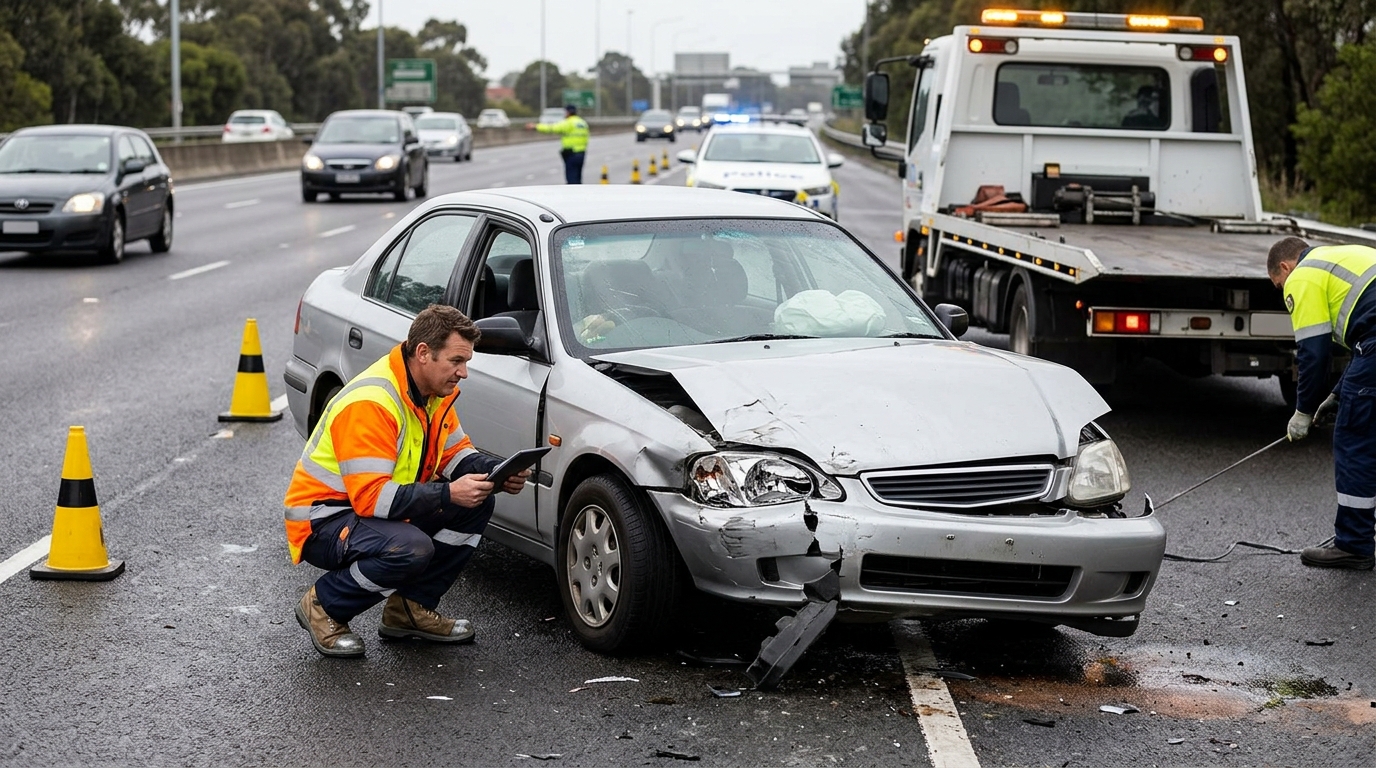
A Volkswagen Golf had lost control on a patch of standing water and struck the central reservation barrier. The resulting impact caused the car to spin back across the carriageway into the path of a following Ford Focus. Both vehicles came to rest in the central reservation lane.
Greater Manchester Police had closed the affected section and were managing traffic. The Highways England traffic officer was also on scene. Neither driver had been seriously injured, which was fortunate given the speed and nature of the impact. However, both vehicles were undriveable and needed to be cleared before the carriageway could reopen.
MW Recovery was contacted by one of the drivers directly. The police had also notified our area coordinator as part of the local recovery rotation. We had two flatbed trucks at the scene within 28 minutes of the initial call.
Working at Night on a Live Motorway
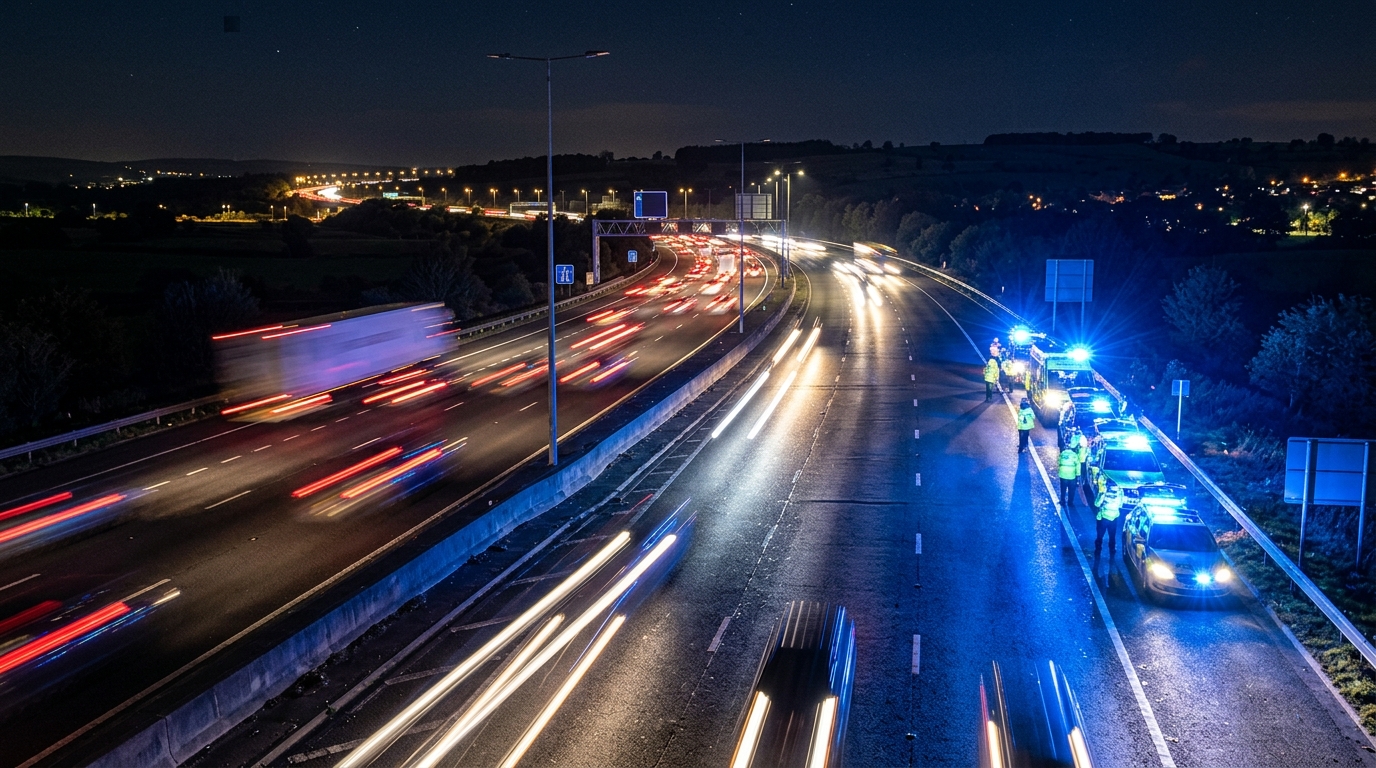
Recovering vehicles from a motorway at 2am is one of the most demanding jobs in the recovery industry. Even with police on scene and a lane closure in place, the risks are significant. Traffic approaching a closure at 70mph has very little time to react, and recovery crews working in the road are exposed to that risk throughout the job.
Our standard procedure for motorway incident recovery includes:
- Positioning the recovery truck upstream of the incident: This places the vehicle between our crew and approaching traffic, providing a physical barrier.
- Full amber beacon activation: All amber lights on at maximum intensity throughout the job.
- Hi-vis gear on all crew members at all times: Our drivers wear EN ISO 20471 Class 3 high-visibility clothing throughout any roadside operation.
- Briefing the police officer on scene: We confirm with the attending officer what areas of the carriageway we have access to and where we should position.
- Working as quickly as safely possible: Motorway incidents should be cleared as quickly as possible to reduce secondary incident risk. Speed of clearance is a safety issue, not just a commercial one.
The VW Golf: Airbag Deployment and Structural Damage
The Golf had significant structural damage. Both front airbags had deployed, the front subframe was crumpled, and the steering rack was bent. There was also fluid on the road from the cooling system. The car could not be driven and could not be towed conventionally because of the front end damage.
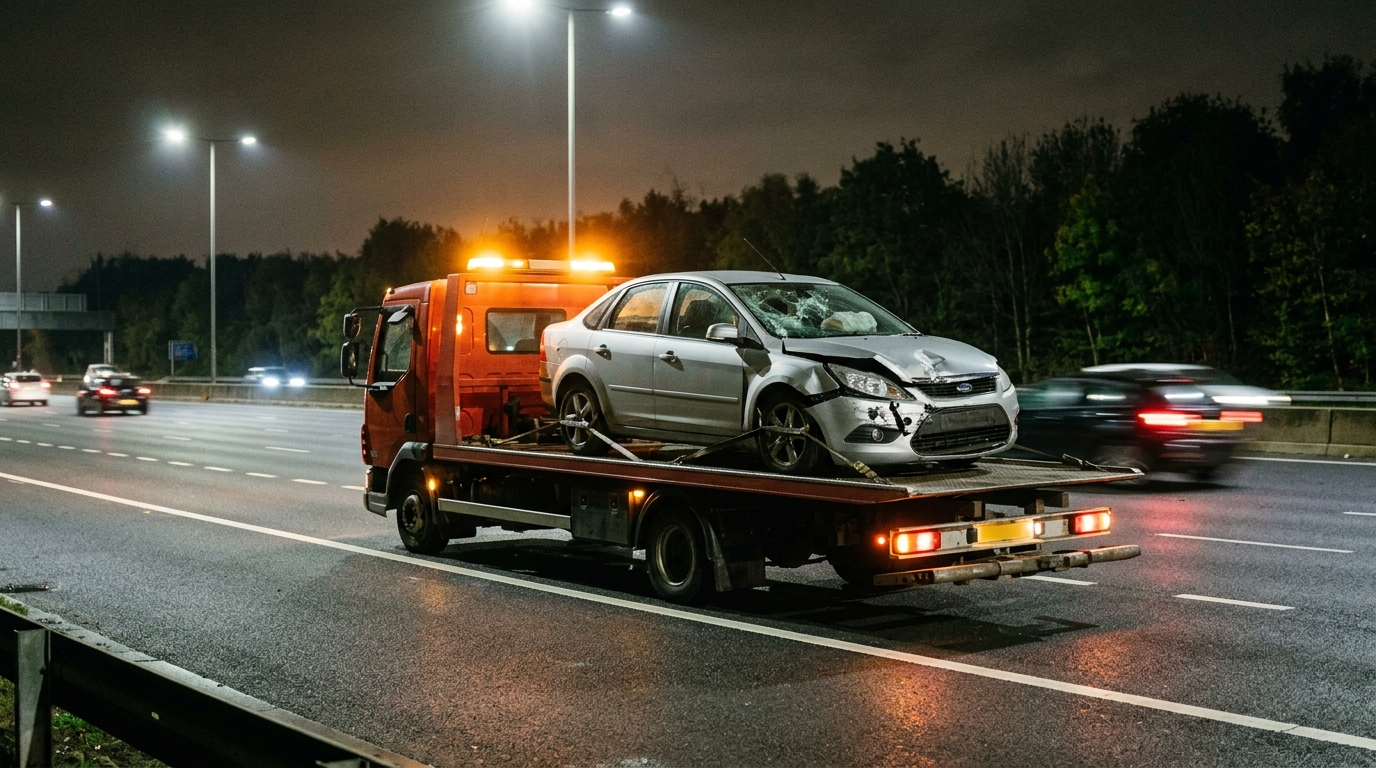
We loaded the Golf onto the first flatbed using our electric winch to pull the vehicle from its resting position against the central reservation onto the truck bed. This process took approximately 12 minutes from first assessment to secured load. The front wheels were placed in cradles because the damage meant they could not rest flat, and we used four tie-down points to secure the vehicle for transport to our Salford workshop.
The Ford Focus: Driveable but Unsafe
The Focus had sustained a significant rear-end impact that had pushed the boot into the back seat area. The tailgate would not close, the rear lights were destroyed, and there was structural deformation in the rear crumple zone. However, the engine started and the front end appeared undamaged.
Even though the Focus was technically capable of being driven, our advice was clear: do not drive it. A vehicle with structural crash damage, non-functional rear lights, and a deformed rear end is illegal to drive on a public road and is also genuinely dangerous. If the deformation had compromised the fuel tank, there was a secondary fire risk. If the rear suspension had been affected, handling could be unpredictable.
The Focus was loaded onto the second flatbed and transported to our workshop for a full structural assessment.
What Happens to Accident-Damaged Vehicles at Our Workshop
Both vehicles arrived at our Salford workshop before 4am. For accident recovery cases, our workshop process includes:
- Initial visual assessment and photography: We document the damage thoroughly. This is important for insurance claims. Photographs taken immediately after recovery are far more useful than those taken days later after a vehicle has been moved around.
- Fluid and safety check: We check for fuel, oil, or coolant leaks that could present a risk in storage. Where a vehicle has deployed airbags, we flag the pyrotechnic components to the vehicle handler.
- Customer consultation: We contact the owner as soon as is reasonably possible to advise on next steps. For write-off vehicles, we advise on the insurance total-loss process. For repairable vehicles, we can provide repair quotations or arrange transfer to an approved repairer.
- Secure storage: Vehicles are stored securely at our compound while insurance claims are processed. Daily storage rates are clearly communicated upfront.
Insurance After a Motorway Accident: What You Need to Know
Many accident victims focus on the immediate emergency and are unprepared for the insurance process that follows. Here is a summary of the key points:
- Report to your insurer the same day: Even if you plan to claim on the other party's insurance, you must notify your own insurer of the accident promptly. Failure to do so can affect your cover.
- Do not admit liability at the scene: Exchange details and let the insurers determine liability. A statement made at the roadside can have legal consequences.
- Collect evidence: If it is safe to do so, photograph both vehicles, the road conditions, any skid marks, and the positions of the cars before they are moved. Our recovery drivers can assist with this.
- Recovery costs and storage fees: If the accident was not your fault, the at-fault party's insurer should cover recovery and storage costs. Keep all receipts and invoices.
- Courtesy vehicles: If you are not at fault and have comprehensive insurance, you may be entitled to a courtesy car while your vehicle is being assessed. Speak to your insurer about this immediately.
Our accident recovery service includes documentation support for insurance purposes. We can provide written confirmation of vehicle condition on arrival, which supports your insurance claim. For complex non-fault accident situations, see also our accident management service.
Aquaplaning on UK Motorways: Why It Happens and How to Avoid It
The Golf in this incident lost control due to aquaplaning, which occurs when a layer of water builds up between the tyre and the road surface, causing the tyre to lose contact with the tarmac. At motorway speeds, the loss of control can be total and almost instantaneous.
Factors that increase aquaplaning risk:
- Tyre tread depth: Legal minimum in the UK is 1.6mm, but handling in wet conditions deteriorates from around 3mm. Many drivers are unaware their tyres are below a safe threshold until it is too late.
- Speed: The faster you are travelling, the harder it is for tread grooves to channel water away from the contact patch. At 70mph in heavy rain, even good tyres are working hard.
- Standing water: Heavy rain combined with inadequate road drainage creates areas of standing water that are particularly hazardous. These often form on outside lanes near drainage points or in dips in the carriageway.
- Tyre pressure: Underinflated tyres have a smaller contact footprint and reduced ability to clear water from the tread, increasing aquaplaning risk.
If you feel your car begin to aquaplane: do not brake sharply or steer aggressively. Hold the wheel straight, ease off the accelerator gradually, and allow the speed to reduce naturally until grip is restored.
We Cover the Entire M60 Ring Road
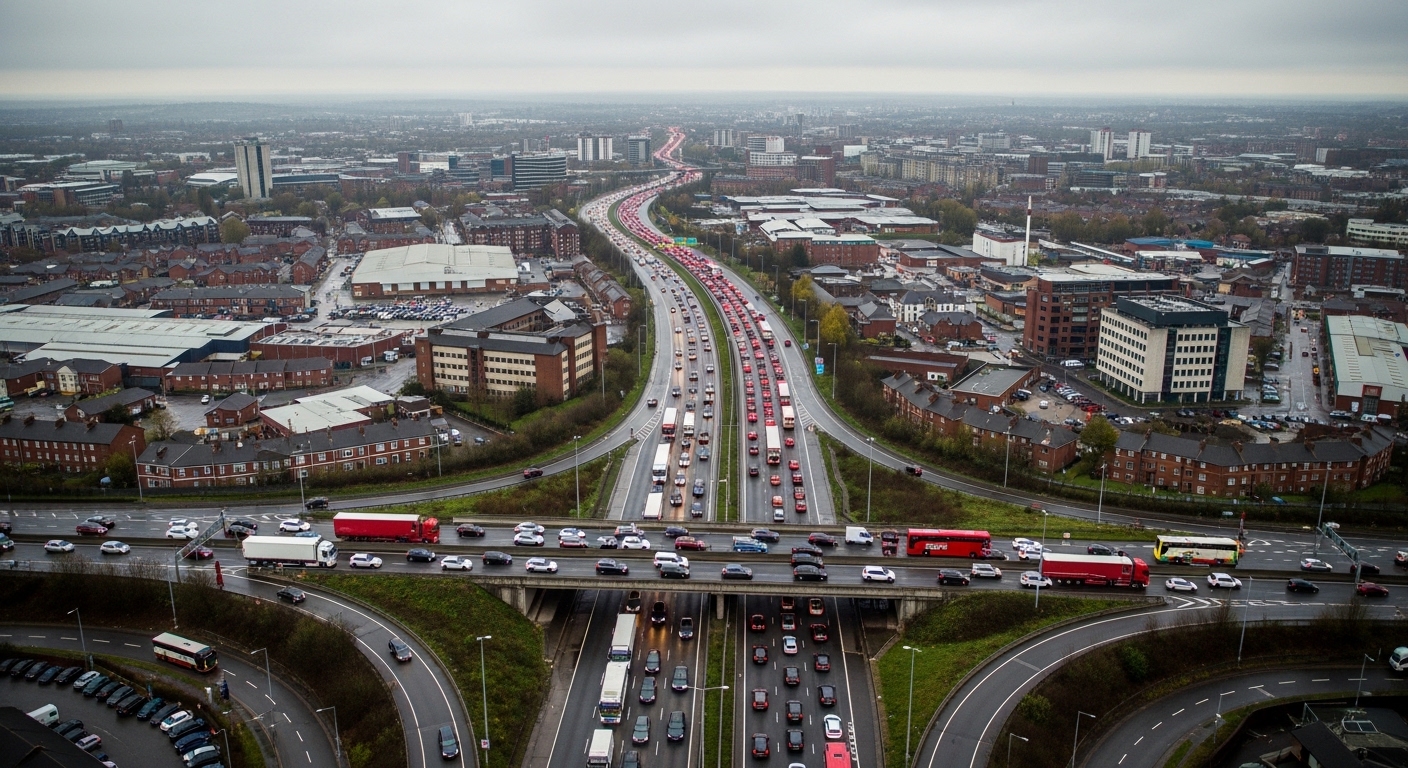
Our recovery team covers all junctions of the M60, including high-incident areas such as the Eccles interchange (J12 to J16), the Trafford Park section, and the approach to the M67. We also cover the M62, M56, M61, M66, and A-roads across Greater Manchester.
See our dedicated motorway recovery service page or find your nearest location at Salford, Worsley, or Eccles.
Frequently Asked Questions
Frequently Asked Questions
Common questions about this topic
Move to the hard shoulder or behind the barrier if it is safe to do so. Switch on your hazard lights. If the car cannot be moved, get yourself and any passengers out of the car and wait behind the barrier. Call 999 if there are injuries, then call MW Recovery on 07553 322281 for vehicle recovery. Do not stand in the carriageway or between the vehicle and flowing traffic.
Need Car Recovery in Manchester?
MW Recovery provides fast, professional breakdown recovery and roadside assistance across all of Greater Manchester. One call and we are on our way.