
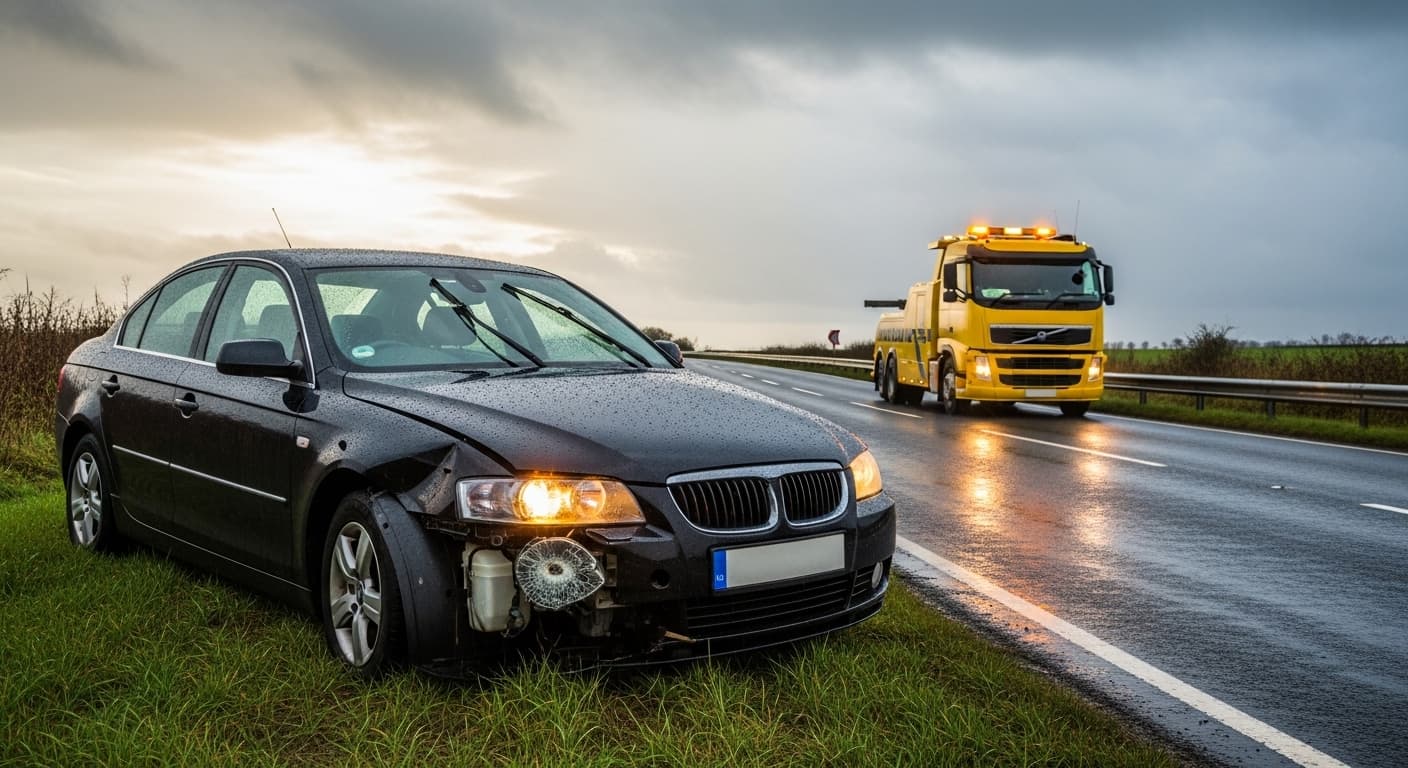
Accident Recovery Manchester: What to Do After a Car Crash
Been in a car accident in Manchester? This step-by-step guide covers what to do at the scene, how to arrange recovery, and how accident management services can help with insurance claims.
Table of Contents
Need accident recovery right now? Our accident recovery near me service is available 24/7 across Greater Manchester. Call 07553 322281 and we dispatch immediately.
What to Do After a Car Accident in Manchester
A car accident is stressful and disorienting, no matter how experienced a driver you are. Whether it is a minor bump on the A57 Mancunian Way, a shunt at a roundabout in Stockport, or a serious collision on the M60, knowing what to do in the minutes and hours after a crash can protect your safety, your legal rights, and your vehicle. This step by step guide covers everything Manchester drivers need to know after an accident, from securing the scene to arranging professional recovery and dealing with insurance.
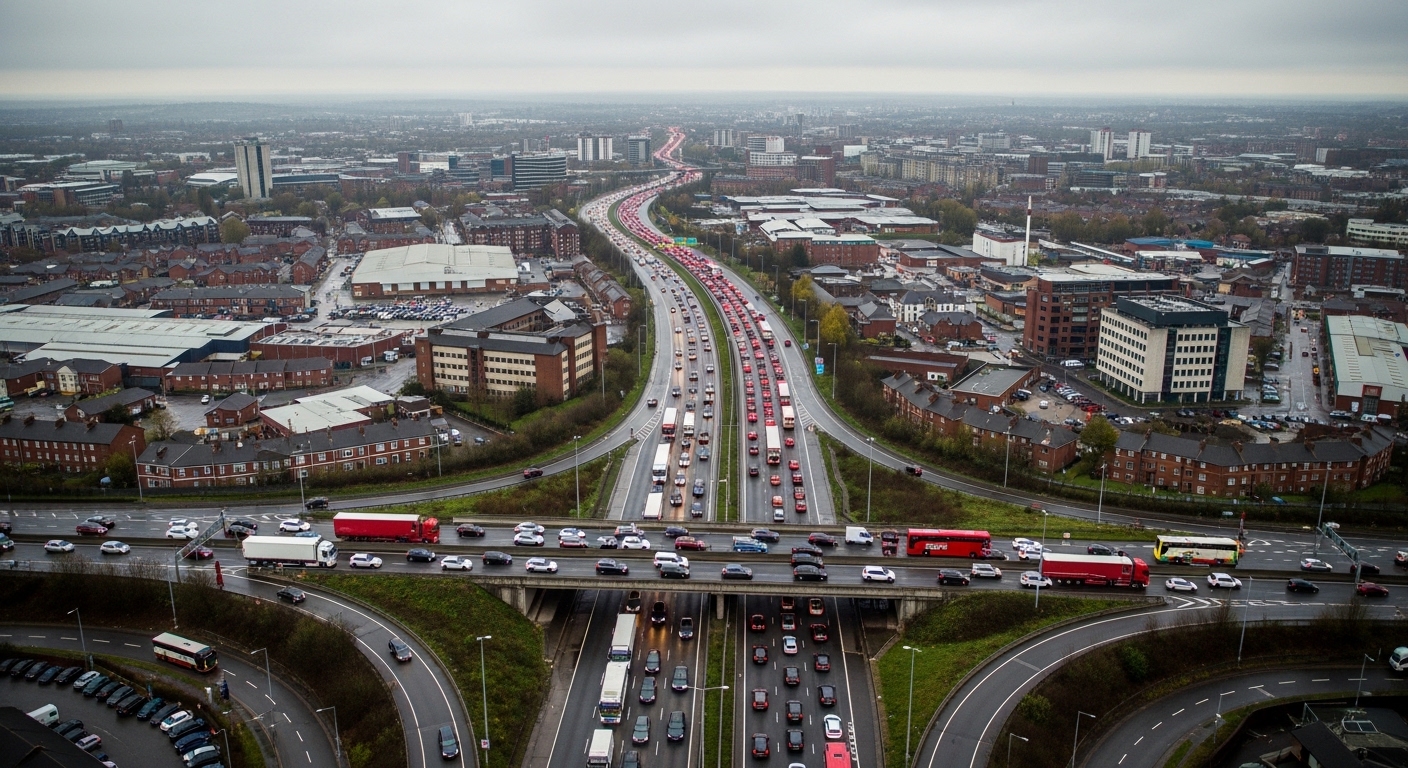
Every year, thousands of road traffic accidents happen across Greater Manchester. The M60 orbital motorway alone sees hundreds of collisions annually, and busy urban routes like the A6, A56, and A62 are constant hotspots. Being prepared with knowledge of what to do after an accident can make a stressful situation much more manageable.
Step 1: Ensure Everyone Is Safe
Your first and most important priority is safety. Before thinking about your vehicle, damage, or insurance, check yourself and all passengers for injuries. Adrenaline can mask pain, so check carefully for any signs of injury including neck pain, headaches, dizziness, or difficulty moving.
If anyone is hurt, call 999 immediately for an ambulance. Do not attempt to move an injured person unless they are in immediate danger, such as from fire or oncoming traffic, as moving them could worsen certain injuries like spinal damage.
If the accident is on a motorway or fast road around Manchester, safety becomes even more critical. Switch on your hazard lights immediately and get everyone out of the vehicle and behind the crash barrier if possible. Motorway accidents on the M60, M62, and M56 are particularly dangerous because of the speed of passing traffic. Standing on the hard shoulder or in a live lane puts you at serious risk of a secondary collision.
If your vehicle is on a smart motorway section without a hard shoulder, try to reach an emergency refuge area. If you cannot move the vehicle, get everyone out from the left side doors and behind the barrier, then call 999.
Step 2: Secure the Scene
If the vehicles are drivable and the accident is minor, move them to the side of the road to avoid blocking traffic and reducing the risk of further collisions. On busy Manchester roads like the A6, A56, Deansgate, or the Oxford Road corridor, a blocked lane can cause major tailbacks within minutes and significantly increases the risk of secondary collisions from distracted drivers.
If the vehicles cannot be moved, keep your hazard lights on and stand well clear of traffic. If you have a warning triangle, place it at least 45 metres behind the vehicles on a normal road. Do not use a warning triangle on a motorway as it puts you at risk walking back along the carriageway.
At night or in poor visibility, which is common in Manchester during the winter months, the risk of secondary collisions is even higher. Make yourself visible with a high visibility jacket if you have one in the car, and keep sidelights or hazard lights on.
Step 3: Exchange Details and Document the Scene
Once everyone is safe and the scene is secure, you need to exchange information with the other driver. By law, you must provide your name and address, the registration number of your vehicle, and your insurance details if asked. You should also collect the following from the other driver:
- Full name, address, and contact number
- Insurance company name and policy number
- Vehicle registration number
- Make, model, and colour of their vehicle
- Names and contact details of any passengers in their vehicle
- Details of any witnesses who saw the accident
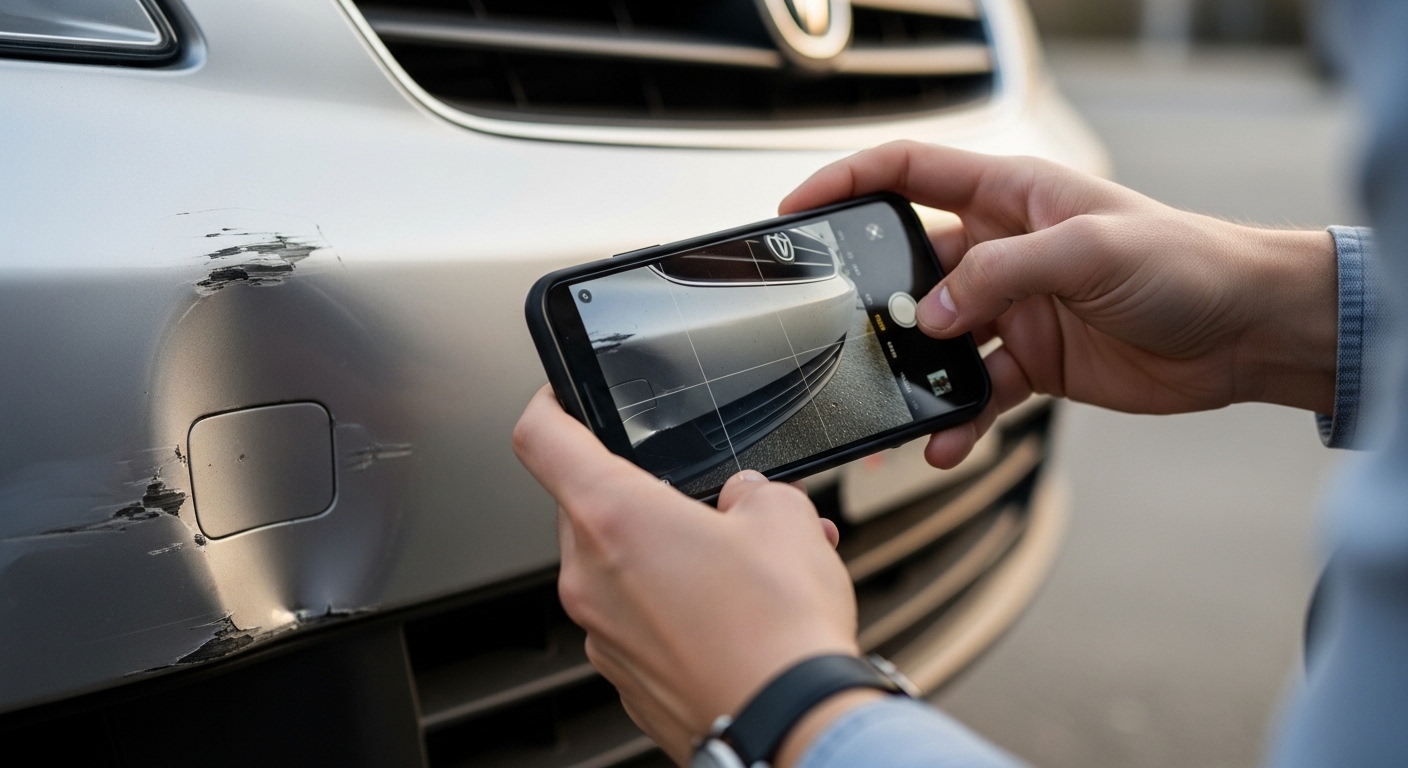
Take photographs of everything. Use your phone to document:
- Damage to all vehicles involved, from multiple angles
- The positions of the vehicles relative to each other and the road
- Road markings, traffic signs, and traffic lights nearby
- Skid marks or debris on the road
- Weather and road conditions at the time
- Any visible injuries
- The other vehicle's registration plate clearly
These photographs are invaluable evidence for insurance claims and can make the difference between a successful claim and a disputed one. Many accident claims come down to one driver's word against another, and photographic evidence removes that ambiguity.
Do not admit fault at the scene, even if you think you may have been partly responsible. Liability is a complex legal matter and should be determined by insurance companies and legal professionals, not at the roadside in a stressful moment.
Step 4: Call for Accident Recovery
If your vehicle is not drivable after the accident, you will need professional accident recovery. This is not the time to call a friend with a tow rope or try to limp home on a damaged wheel. A vehicle that has been in a collision may have hidden structural damage, damaged brakes, compromised steering, or a leaking fuel line that makes it genuinely dangerous to drive.
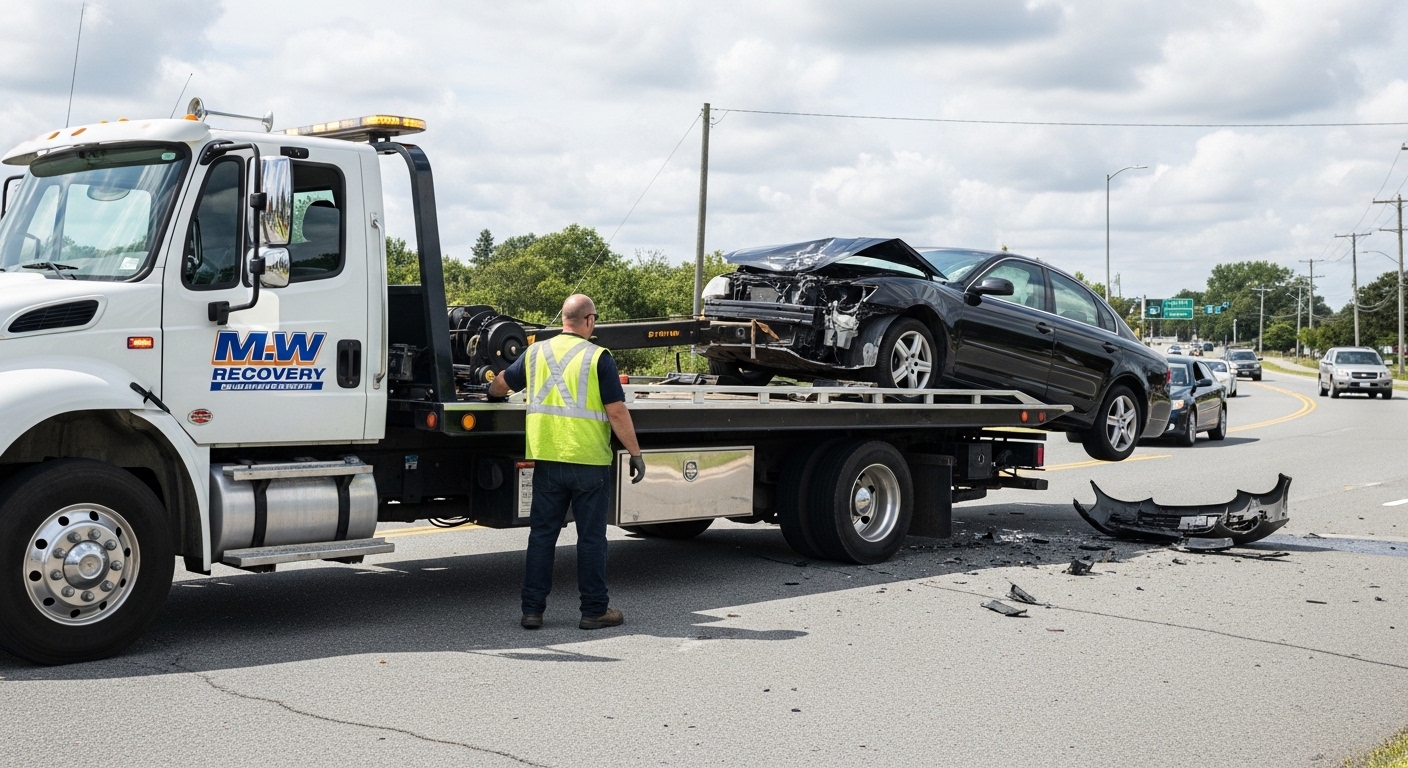
Call MW Recovery on 07553 322281 and we will dispatch a flatbed recovery truck to your location. We use flatbed trucks for all accident recoveries because they are the safest way to transport a damaged vehicle without causing further damage. Unlike wheel lift towing, a flatbed carries your entire vehicle clear of the road, which is essential when damage may have affected the wheels, suspension, or drivetrain.
We cover all of Greater Manchester for accident recovery including Manchester city centre, Trafford, Stockport, Oldham, Bolton, and all surrounding areas. Our typical response time is 30 to 60 minutes depending on your location and traffic conditions.
Step 5: Consider Accident Management Services
Dealing with insurance companies after an accident can be time consuming, confusing, and frustrating. You are already dealing with the stress of the accident itself, possible injuries, and the disruption to your daily life. Our accident management service takes the stress out of the entire process by handling everything on your behalf:
- Vehicle recovery and secure storage: We recover your vehicle and store it safely at our Salford workshop while arrangements are made for repair or assessment.
- Insurance liaison: We communicate with your insurer and the other party's insurer, providing all necessary documentation, photographs, and reports.
- Courtesy car arrangement: If you need to keep driving while your car is being repaired, we can arrange a courtesy vehicle so your life is not disrupted.
- Repair coordination: We work with approved body shops and repair centres to get your vehicle fixed to the highest standard.
- Claims support: We help ensure you receive everything you are entitled to including repair costs, hire car costs, and in some cases personal injury compensation.
This service is especially valuable if the accident was not your fault. In non fault accidents, the other party's insurer is responsible for covering all your costs, but navigating this process yourself can be difficult. Our accident management team knows the process inside out and will fight your corner to make sure you are not left out of pocket.
Step 6: Report the Accident
You are legally required to report a road traffic accident to the police within 24 hours if any of the following apply:
- Anyone was injured in the accident
- You did not exchange details with the other driver at the scene
- Damage was caused to property other than the vehicles involved, such as a wall, fence, lamppost, or parked car
- You suspect the other driver was under the influence of alcohol or drugs
- The other driver left the scene without stopping, which is a hit and run offence
Even if you are not legally required to report the accident, it is good practice to notify the police if there is any dispute about what happened. A police report provides an independent record that can be valuable for insurance claims.
You should also notify your own insurance company as soon as possible, even if you were not at fault and even if you do not intend to make a claim on your own policy. Most policies require you to report any accident you are involved in, and failing to do so could invalidate your cover.
Common Accident Locations in Greater Manchester
Based on our experience recovering vehicles across Manchester, these are some of the most common accident hotspots:
- M60 motorway: Particularly around junctions 12 to 18 through Eccles and Trafford, and the Denton interchange at junctions 24 and 25. The M60 is one of the busiest motorways in the country and tailback shunts are extremely common during rush hour.
- A56 Chester Road: Heavy traffic through Stretford and Sale with multiple pedestrian crossings and right turn junctions creates frequent collision opportunities.
- A57 Hyde Road: A busy dual carriageway through Gorton and Denton with several accident prone junctions and roundabouts.
- Mancunian Way: A fast urban dual carriageway through the city centre where speed, lane changes, and slip road merges cause regular incidents.
- M62 eastbound: The steep gradients and exposed weather conditions around Rochdale and Saddleworth, particularly in winter when the road surface can be icy.
- A580 East Lancs Road: A long, straight dual carriageway where high speeds and tiredness contribute to serious collisions.
- Piccadilly and city centre junctions: Complex one way systems, tram tracks, bus lanes, and high volumes of pedestrians and cyclists make city centre driving challenging.
MW Recovery provides fast response times to all these locations from our Salford base.
What to Keep in Your Car for Emergencies
Being prepared for an accident or breakdown means keeping a few essential items in your car at all times:
- A high visibility jacket for every regular passenger
- A warning triangle
- A fully charged phone or a car phone charger
- A pen and paper for noting down details
- Your insurance documents or at least your policy number
- A torch, especially useful during Manchester's dark winter evenings
- A basic first aid kit
Having these items to hand can make a significant difference to your safety and your ability to handle the situation calmly and effectively.
How Long Does Accident Recovery Take?
MW Recovery aims to reach you within 30 to 60 minutes anywhere in Greater Manchester. The exact time depends on your location, current traffic conditions, and whether emergency services need to clear the scene before we can access your vehicle.
For motorway accidents, we prioritise rapid response because of the safety risks involved with vehicles stopped on live carriageways. We coordinate with highways officers and police to ensure we can access the scene safely and recover your vehicle as quickly as possible.
Once on scene, loading a damaged vehicle onto our flatbed typically takes 15 to 30 minutes depending on the extent of the damage and the position of the vehicle. We then transport it directly to your chosen destination or to our secure workshop in Salford.
If you need accident recovery in Greater Manchester now, MW Recovery attends crash scenes 24 hours a day. Our accident recovery near me service covers all of Greater Manchester with flatbed trucks that load damaged vehicles without causing further harm. We also offer secure storage at our Salford site while you deal with your insurance claim. Call 07553 322281 for immediate attendance.
Frequently Asked Questions
Common questions about this topic
MW Recovery aims to reach you within 30 to 60 minutes anywhere in Greater Manchester. For motorway accidents on the M60, M62, or M56, we prioritise rapid response to get you to safety as quickly as possible. Call us on 07553 322281 for immediate assistance.
Need Car Recovery in Manchester?
MW Recovery provides fast, professional breakdown recovery and roadside assistance across all of Greater Manchester. One call and we are on our way.