
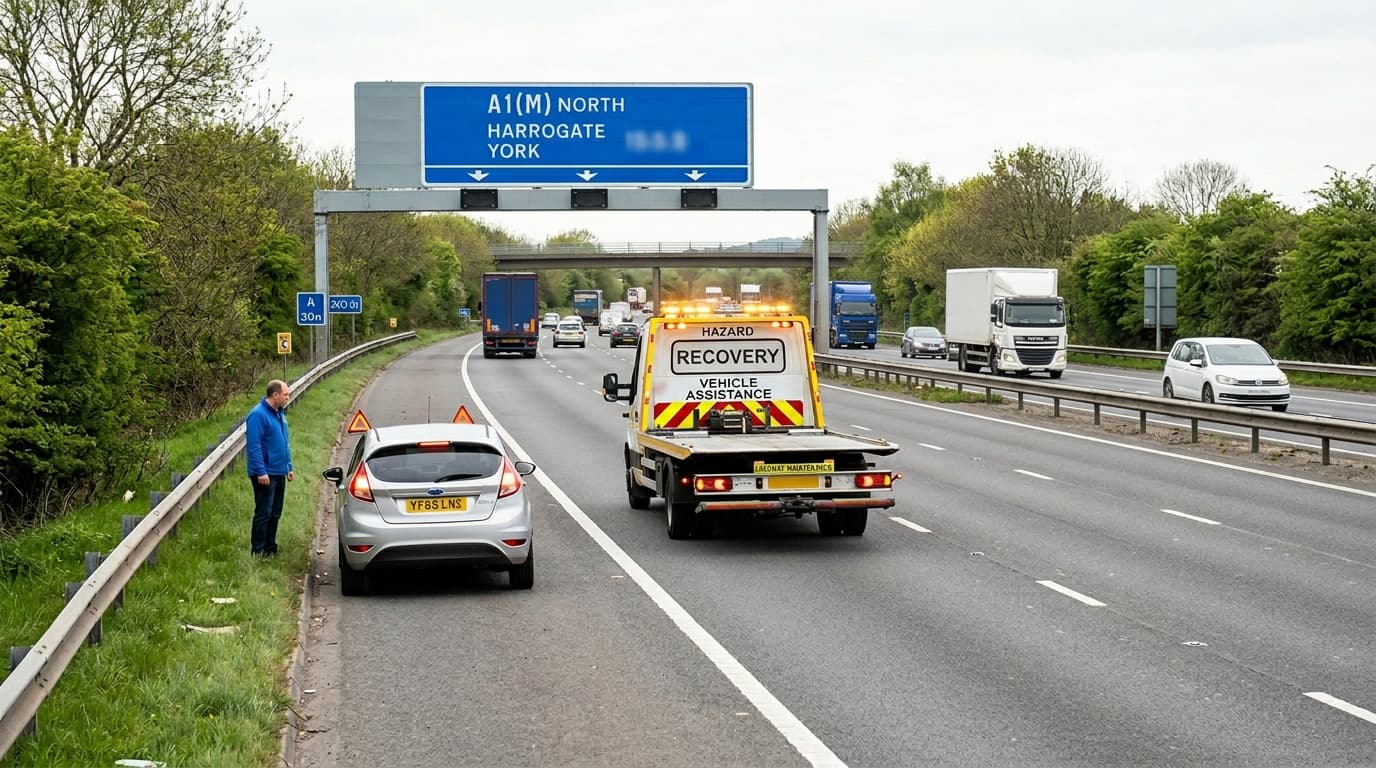
What Causes a Car to Break Down? The Most Common Reasons Explained
From flat batteries and tyre blowouts to alternator failure and timing belts, this guide explains the most common causes of car breakdowns in the UK and how to spot the warning signs.
Table of Contents
Most drivers deal with a breakdown at some point. The frustrating part is that the vast majority happen for reasons that could have been spotted or prevented with a bit of awareness. Understanding what actually causes cars to break down is useful whether you want to reduce your risk or you are trying to figure out what went wrong after the fact.
This guide covers the most common breakdown causes across UK roads, what warning signs to watch for, and what to do when the worst happens.
Flat or Dead Battery
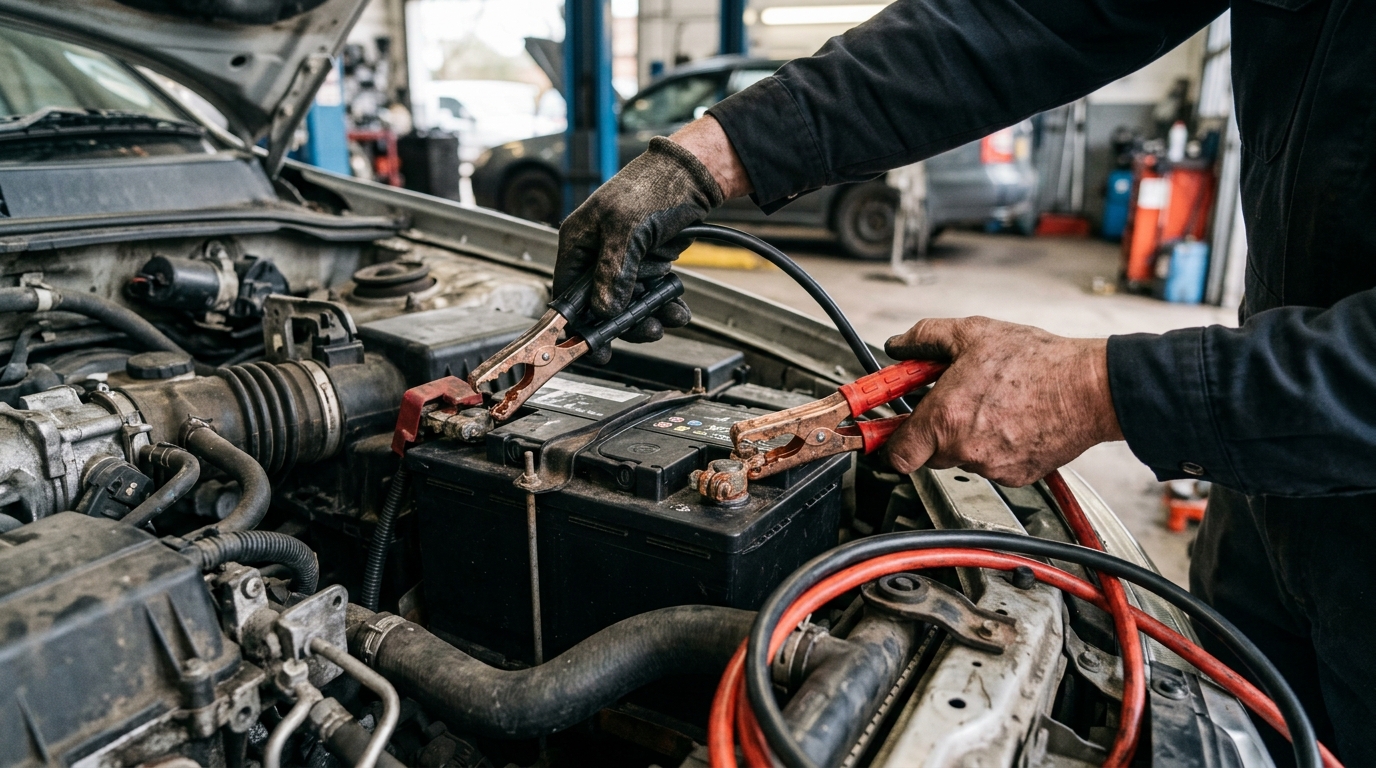
Battery failure is the single most common cause of breakdowns in the UK. The AA, RAC, and independent roadside recovery operators all report it at the top of their callout lists, year after year.
A car battery typically lasts between 3 and 5 years. After that point, it struggles to hold a full charge, particularly in cold weather when the engine needs more power to start. The most common culprits behind a dead battery are: lights or accessories left on when the engine is off, short frequent journeys that do not give the alternator enough time to recharge the battery, an ageing battery that has simply reached the end of its life, and a faulty alternator that is not keeping the battery topped up while the engine runs.
Warning signs include slow engine cranking when you turn the key, dashboard warning lights flickering or coming on, and electrical accessories behaving oddly. If you notice any of these, getting the battery tested before it fails completely is worth doing.
If you are already stranded, MW Recovery provides jump start and battery services across Greater Manchester, often resolving the situation at the roadside without needing a tow.
Tyre Problems
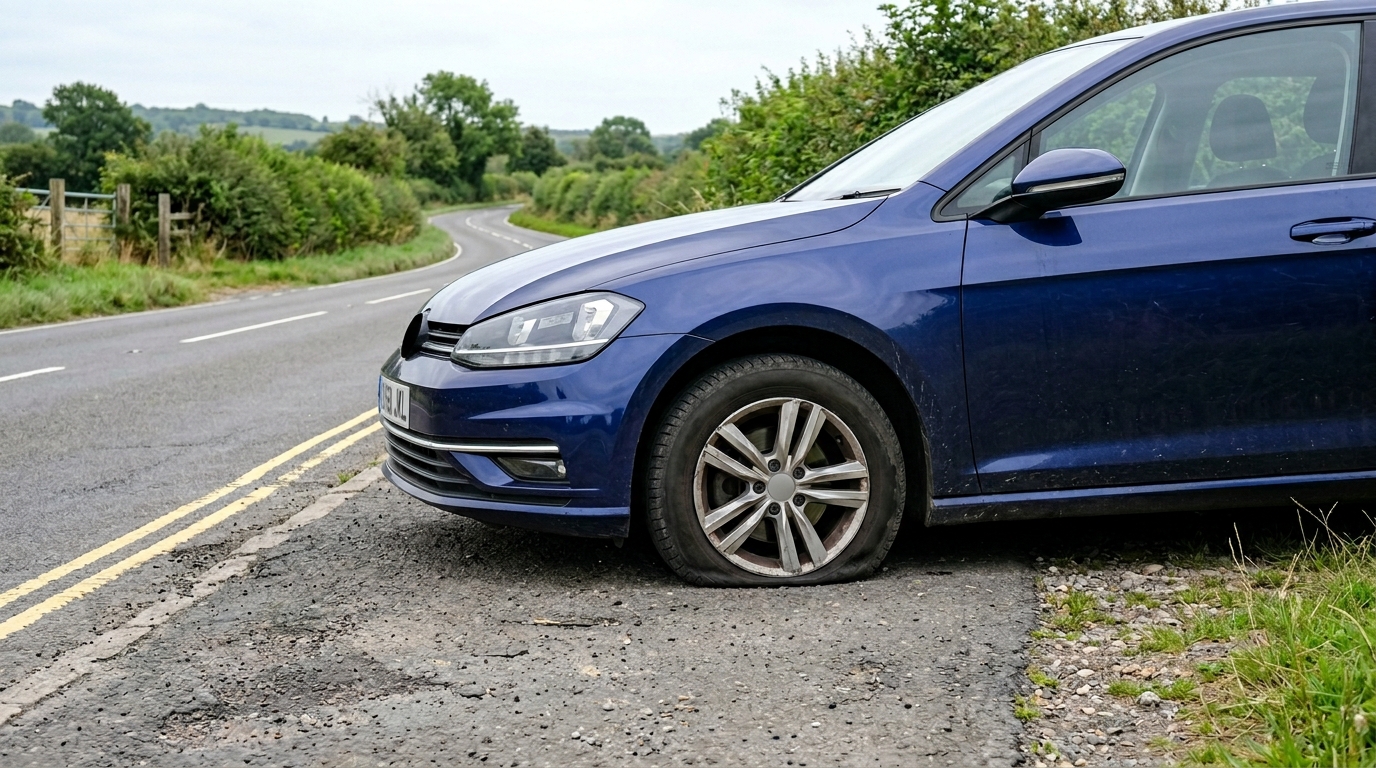
Flat tyres and tyre blowouts are the second most frequent breakdown cause. A tyre can go flat from a slow puncture, a sharp object in the road, or a blowout caused by driving on an underinflated tyre at speed.
Blowouts on motorways are particularly dangerous because the sudden loss of pressure can cause the vehicle to pull sharply to one side. Keeping tyres inflated to the manufacturer's recommended pressure and checking the tread depth regularly reduces the risk significantly. The legal minimum tread depth in the UK is 1.6mm across the central three quarters of the tyre, though most tyre specialists recommend replacing before you reach 3mm.
MW Recovery offers roadside wheel changes when a spare is available. If you do not carry a spare or your vehicle has run-flat tyres that have been driven on too long, a full recovery will be needed.
Engine Overheating
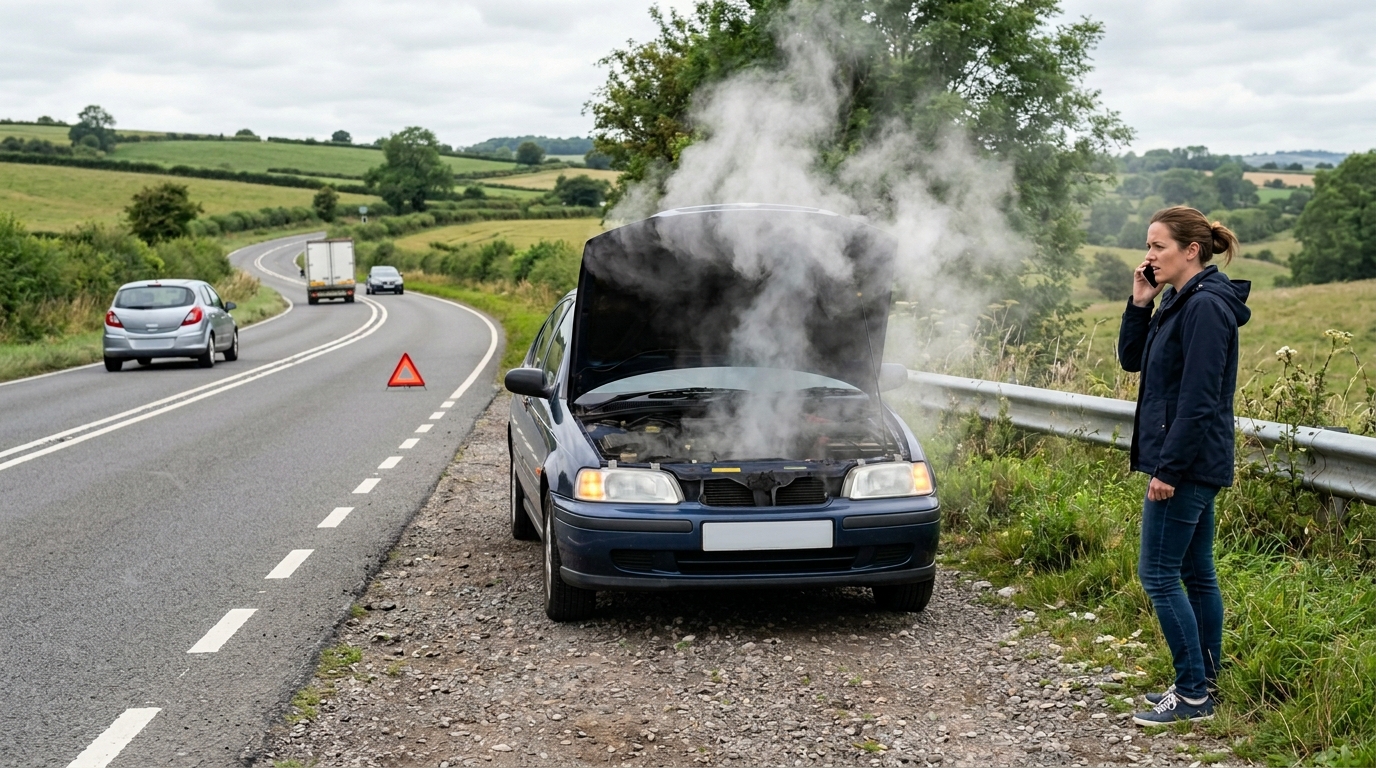
The temperature warning light coming on while driving is something that should never be ignored. Engine overheating is a serious breakdown cause that, if not dealt with immediately, can cause permanent engine damage.
Common causes of overheating include low coolant levels, a coolant leak, a stuck thermostat, a failing water pump, or a blocked radiator. Driving in slow traffic on a hot day can also push an engine that is already running warm over the edge.
If the temperature gauge climbs into the red or the warning light appears, pull over as soon as it is safe to do so and switch the engine off. Do not open the bonnet immediately. Let the engine cool for at least 20 to 30 minutes before inspecting anything. Never remove the coolant cap while the engine is hot.
Alternator Failure
The alternator keeps the battery charged while the engine is running. When it fails, the battery slowly drains even with the engine on. The car will eventually cut out, sometimes with very little warning.
Signs of alternator failure include the battery warning light appearing on the dashboard, dimming headlights, flickering interior lights, electrical components cutting in and out, and the engine running rough. If you see the battery light come on with the engine running, it is usually the alternator rather than the battery itself causing the problem.
An alternator fault typically requires recovery to a garage since it is not a roadside repair. MW Recovery can transport your vehicle to a workshop of your choice across Manchester, Salford, Stockport, and all Greater Manchester areas.
Running Out of Fuel or Using the Wrong Fuel
Running out of fuel accounts for a surprisingly large number of callouts. It is entirely avoidable but happens, usually when drivers miscalculate range or are distracted and miss low fuel warnings.
Wrong fuel is a separate but common issue. Putting petrol into a diesel car is the most frequent version and can cause significant engine damage if the car is started or driven after misfuelling. The safest response if you realise you have put in the wrong fuel before starting the engine is to call for recovery immediately and have the tank drained.
Clutch Failure
Clutch failure can happen gradually or suddenly. A clutch that has been slipping for a while will eventually stop engaging altogether, leaving the car unable to drive. The symptoms of a worn clutch include a high biting point, slipping under acceleration where the engine revs but the car does not accelerate as expected, and difficulty selecting gears.
Clutch replacement is a workshop job. If your clutch fails while driving, the car will need to be recovered to a garage.
Starter Motor Problems
A failing starter motor usually announces itself by making a clicking or grinding noise when you turn the key, or by the engine refusing to turn over at all despite the battery being fine. The starter motor is the component that spins the engine to get it started. When it fails, the car simply will not start.
A jump start will not fix a dead starter motor. If the battery is confirmed to be healthy but the car will not start and you can hear a clicking noise, the starter motor is the likely cause and a recovery will be needed.
Timing Belt Failure
The timing belt keeps the engine's internal components working in sync. If it snaps, the result is usually severe engine damage, sometimes beyond economic repair. Most manufacturers recommend replacing the timing belt at specific mileage or age intervals, typically between 40,000 and 100,000 miles depending on the vehicle.
This is one of the few breakdown causes where there are often no obvious warning signs before failure. Sticking to the manufacturer's service schedule is the only reliable way to manage the risk.
Electrical Faults
Modern cars rely on complex electrical systems. Faults can affect anything from sensors to the central locking, and in serious cases they can prevent the car from running at all. Electrical faults can be hard to diagnose without the right equipment, and some will cause the engine warning light to come on without immediately stopping the car.
If the engine management light comes on steadily (not flashing), the car can usually be driven carefully to a garage. A flashing light generally means a more serious fault and driving should be avoided until the car has been assessed.
How to Reduce Your Breakdown Risk
No car is immune to breakdown, but there are practical steps that reduce the risk considerably:
- Get the car serviced at the manufacturer's recommended intervals
- Check tyre pressures monthly and before long journeys
- Monitor the battery, especially on older vehicles and in cold weather
- Keep an eye on coolant, oil, and other fluid levels
- Do not ignore warning lights. Most are early warning signals, not immediate emergencies
- Replace the timing belt at the recommended interval
- Keep the fuel tank above a quarter full to reduce strain on the fuel pump
When You Break Down in Greater Manchester
If a breakdown does happen, MW Recovery provides 24/7 breakdown recovery across Greater Manchester. We cover all major routes including the M60, M62, and M56, as well as residential roads, industrial areas, and car parks across all Greater Manchester boroughs.
Many breakdowns can be resolved at the roadside with a jump start or wheel change. When the car needs to go to a workshop, we can transport it to your chosen garage. For an immediate response, visit our car recovery near me page or call us directly.
Frequently Asked Questions
Common questions about this topic
Flat or dead batteries are the most common cause of breakdown in the UK, accounting for a large proportion of all roadside callouts. Battery failure is more likely in cold weather, on older batteries, and in vehicles used mainly for short journeys.
Need Car Recovery in Manchester?
MW Recovery provides fast, professional breakdown recovery and roadside assistance across all of Greater Manchester. One call and we are on our way.