
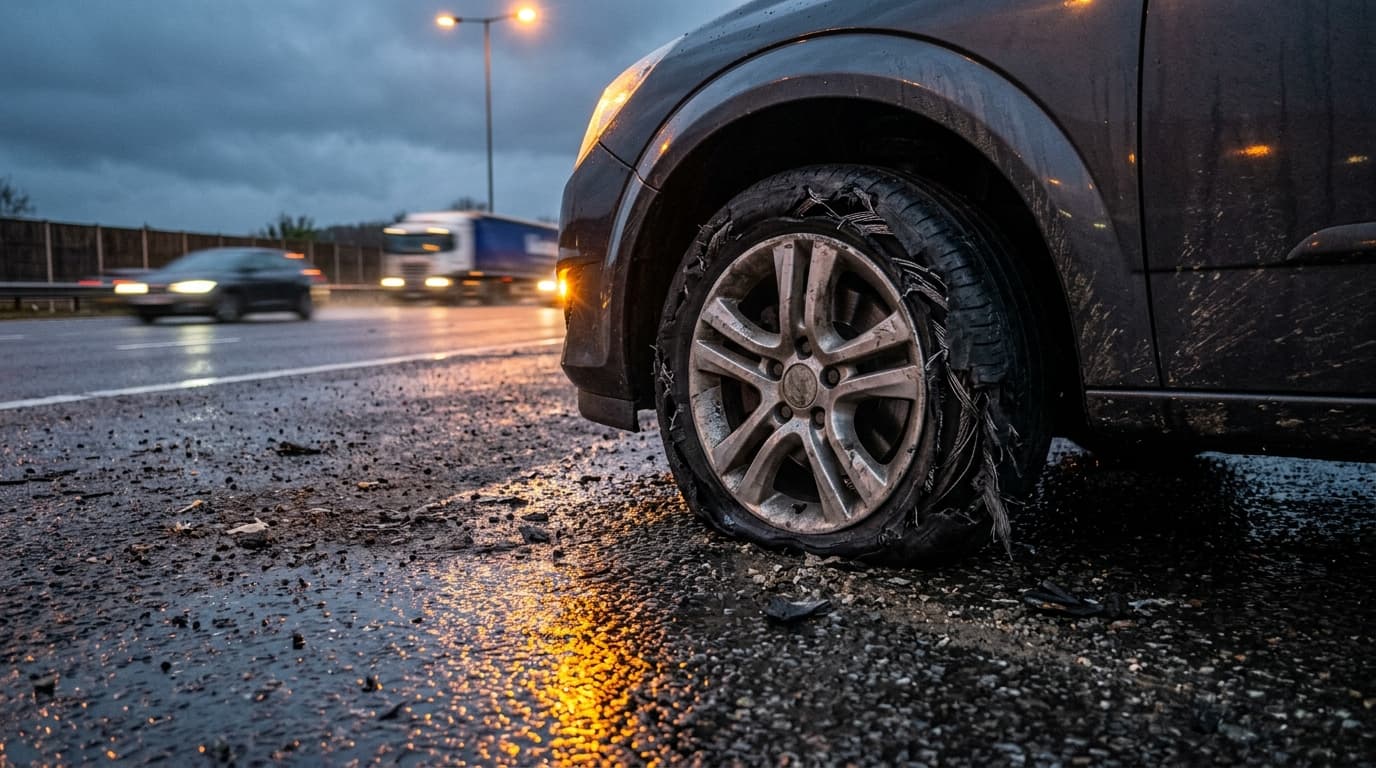
Tyre Blowout on the Motorway in Manchester: What to Do and How to Stay Safe
A tyre blowout at motorway speed is one of the most frightening driving experiences. Here is exactly what to do if it happens to you on the M60, M62, or M56 in Greater Manchester.
Table of Contents
A tyre blowout at motorway speed is one of the most frightening things that can happen to a driver. The steering wheel pulls hard to one side, the car feels suddenly unstable, and everything happens very fast. Knowing in advance what to do and what not to do can be the difference between a controlled stop and a serious accident.
This guide covers what causes tyre blowouts, exactly what to do when one happens on the M60, M62, or M56, how to deal with the specific challenges of Greater Manchester's motorway network, and how to get fast tyre change or recovery assistance when you need it.
What Causes a Tyre Blowout
Understanding the causes helps you reduce the risk before a blowout happens. Blowouts are not random. They usually happen for one of several identifiable reasons.
Underinflation
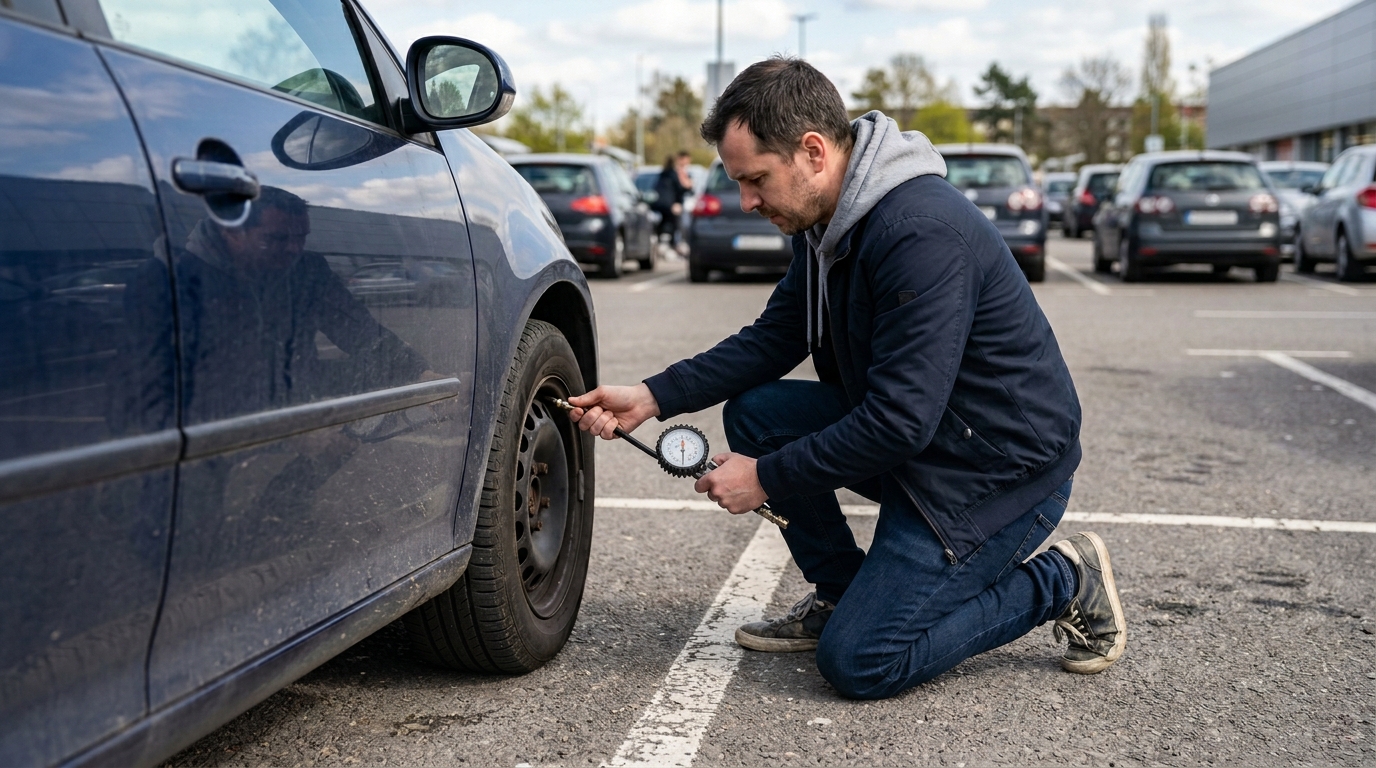
This is the most common cause of tyre blowouts in the UK. An underinflated tyre flexes more with each rotation. The sidewall overheats as a result of this excess flexing. Over time the tyre's internal structure breaks down and at some point, often when driving at motorway speed where the tyre is rotating quickly and already warm, the tyre gives way suddenly.
Many drivers check their tyre pressure rarely or never. Checking pressure once a month and before any long journey is a straightforward habit that prevents a large number of roadside emergencies. The correct pressures for your vehicle are shown on a sticker inside the driver's door frame.
Overloading the Vehicle
Every tyre has a load rating shown on the sidewall. Exceeding this load puts the tyre under excess stress. This is a particular issue with vans, SUVs, and vehicles carrying heavy loads, where the driver may not be aware of the weight limits applying to each individual axle.
Road Hazard Damage
Hitting a pothole at speed is a common trigger for blowouts, particularly on tyres that are already partially worn or marginally underinflated. Greater Manchester's road network, particularly in urban areas and on some A-road sections, has significant pothole issues that develop over winter and are slow to be repaired in spring.
Debris on the road is a surprisingly common issue on heavily trafficked routes like the M60 and M62. Items falling from commercial vehicles, fragments of failed tyres from HGVs, and road detritus can all puncture a tyre instantly or create a cut that leads to a blowout later in the same journey.
Tyre Age and Condition
Tyres deteriorate with age regardless of how much they have been used. The rubber compounds break down over time and a tyre that looks fine visually may have structural weakness that becomes apparent under sustained motorway load. Most manufacturers recommend replacing tyres more than five to seven years old regardless of remaining tread depth. The manufacture date is moulded into the tyre sidewall as a four-digit code showing the week and year of production.
What to Do When a Tyre Blows Out at Motorway Speed
The seconds immediately after a blowout are the most critical. Your instincts will push you towards braking hard and steering sharply against the pull, but both of these reactions make the situation considerably worse.
Keep a Firm Grip and Hold Your Course
The moment a tyre blows, grip the steering wheel firmly with both hands. Do not jerk the wheel. The car will pull toward the blown tyre. Apply gentle corrective steering to hold your lane position. Do not fight the car aggressively, just hold it steady and focused ahead.
Do Not Brake Hard
Hard braking during a blowout can cause the car to spin, particularly if a rear tyre has blown. Instead, ease off the accelerator gradually and let the car slow naturally. Once the car is stable and below 40mph, you can apply the brakes gently if needed to reach the hard shoulder safely.
Signal and Move to the Hard Shoulder Gradually
Once the car is under control and slowing, signal left and move across to the hard shoulder in a controlled, gradual movement. Do not attempt any sudden lane changes. Move slowly and deliberately, signalling well in advance so other drivers can react.
If the blowout happens in the right-hand lane of a three-lane motorway, this process takes longer and requires more concentration. Stay calm, hold the car steady, and move left one lane at a time when it is safe to do so.
On the Hard Shoulder After a Blowout
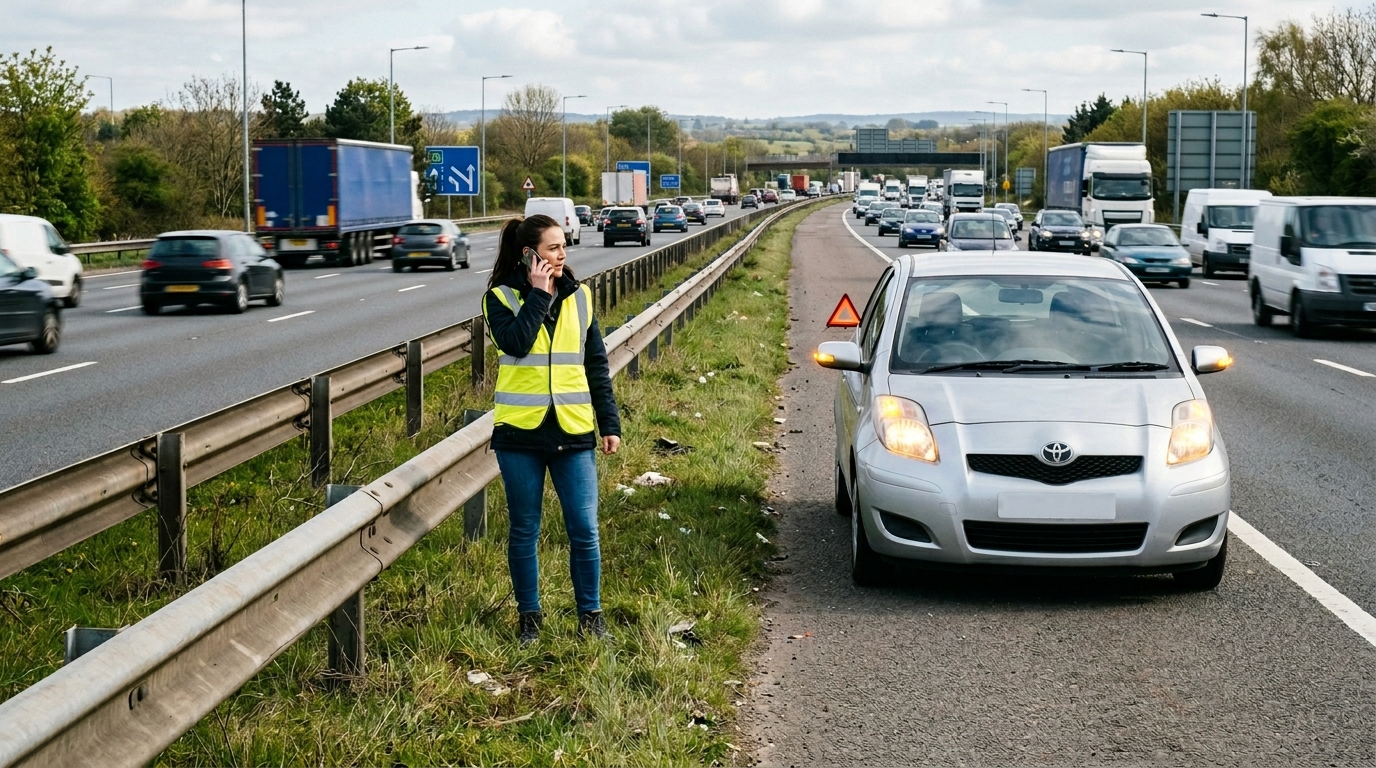
Once you are on the hard shoulder, switch on hazard lights immediately. Pull as far left as possible, ideally with your tyres touching or just over the white line at the edge of the hard shoulder. This maximises the distance between your car and vehicles passing at speed.
Exit the vehicle on the passenger side. Do not open the driver's door toward traffic. Walk to the far side of the barrier and stay away from the carriageway. Do not stand behind your vehicle or between the car and moving traffic.
Call for assistance from the safety of the other side of the barrier. If you have a high-visibility jacket in the car, retrieve it only if you can do so safely from the passenger side without re-entering the carriageway side of the vehicle.
Do not attempt to change the tyre yourself on the hard shoulder of a motorway. The risk from vehicles passing at 70mph makes this extremely dangerous. Wait for professional recovery assistance to arrive.
Smart Motorway Considerations on the M60 and M62
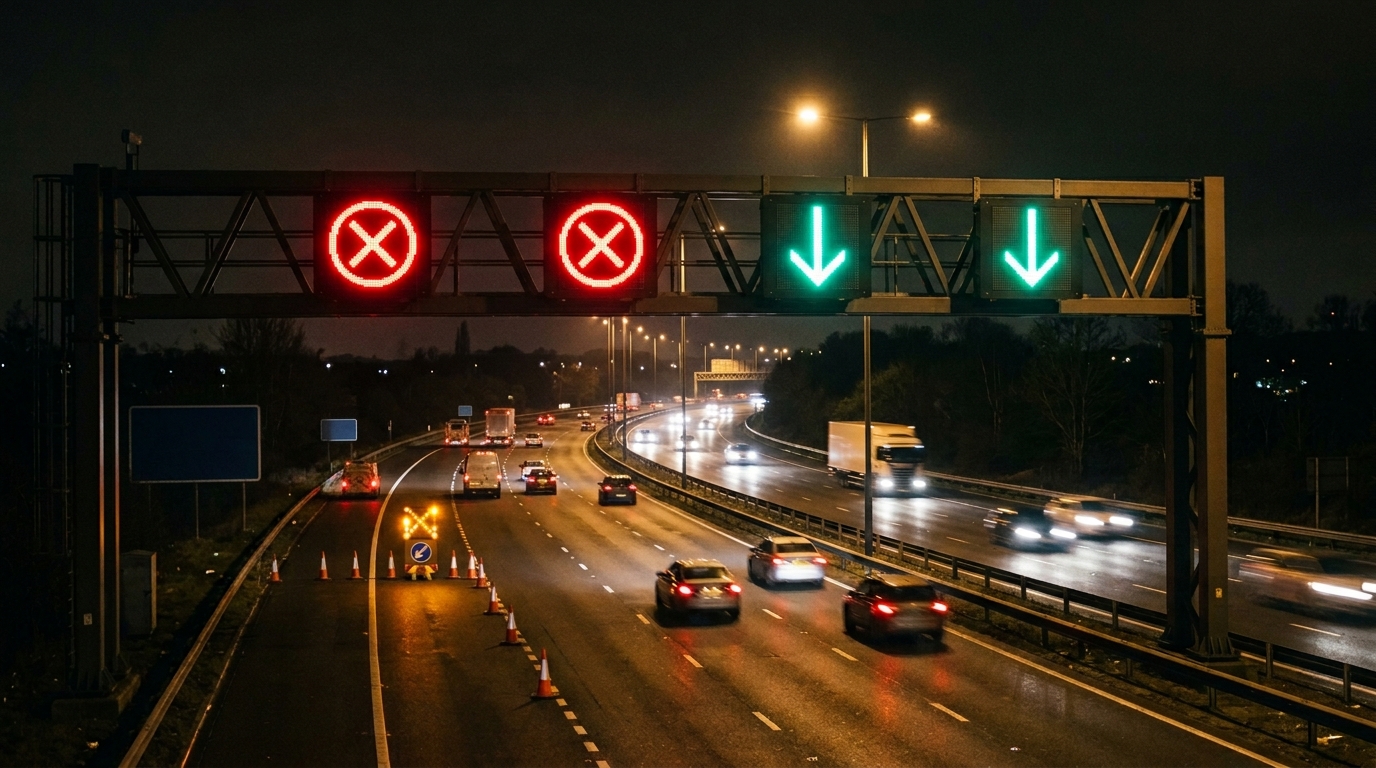
Several sections of Greater Manchester's motorway network operate as smart motorways with no permanent hard shoulder. The M60 has sections operating under all-lane-running, as does the M62. On these stretches, if you have a blowout and cannot reach an Emergency Refuge Area (ERA), you may have to stop in a live traffic lane.
If this happens, switch on hazard lights immediately. Call 999 without hesitation. This is a genuine emergency and the police and Highways England will deploy traffic management resources. The overhead gantry signs should be updated to close the lane above your vehicle but do not rely on this happening instantly.
Emergency Refuge Areas on the M60 and M62 are marked with blue signs featuring an orange SOS phone symbol. On all-lane-running sections they are placed approximately every mile, though the exact spacing varies. Being aware of where the next ERA is when you notice a tyre problem developing gives you time to reach it before the tyre fails completely.
Tyre Blowout Hotspots on Greater Manchester Motorways
Certain sections of the motorway network around Manchester generate a higher than average number of tyre-related incidents based on what our recovery teams attend.
M60 Junction 12 to Junction 15
This section carries heavy commercial traffic serving distribution parks north and east of Manchester. HGVs drop debris, the road surface takes intense daily wear, and tyre fragments from truck blowouts are a recurring hazard. Debris-related tyre damage is a consistent issue on this stretch.
M62 East of Junction 18
The M62 rises significantly as it crosses the Pennine foothills east of Manchester. The elevated sections are exposed to more severe winter weather and the thermal stress on the road surface is greater than on lower sections. Potholes and surface defects appear more frequently here after harsh winters, creating tyre hazard risks especially in the first months of the year before repair works catch up.
M56 Junction 3 to Junction 6
This section of the M56 connects the M60 to Manchester Airport and carries high volumes of luggage-laden passenger vehicles, airport minibuses, and goods vehicles. The weave between Junctions 3 and 4 generates a high volume of sudden speed changes that put short-term stress on tyres, particularly at peak travel times around school holidays.
Getting Help After a Motorway Tyre Blowout
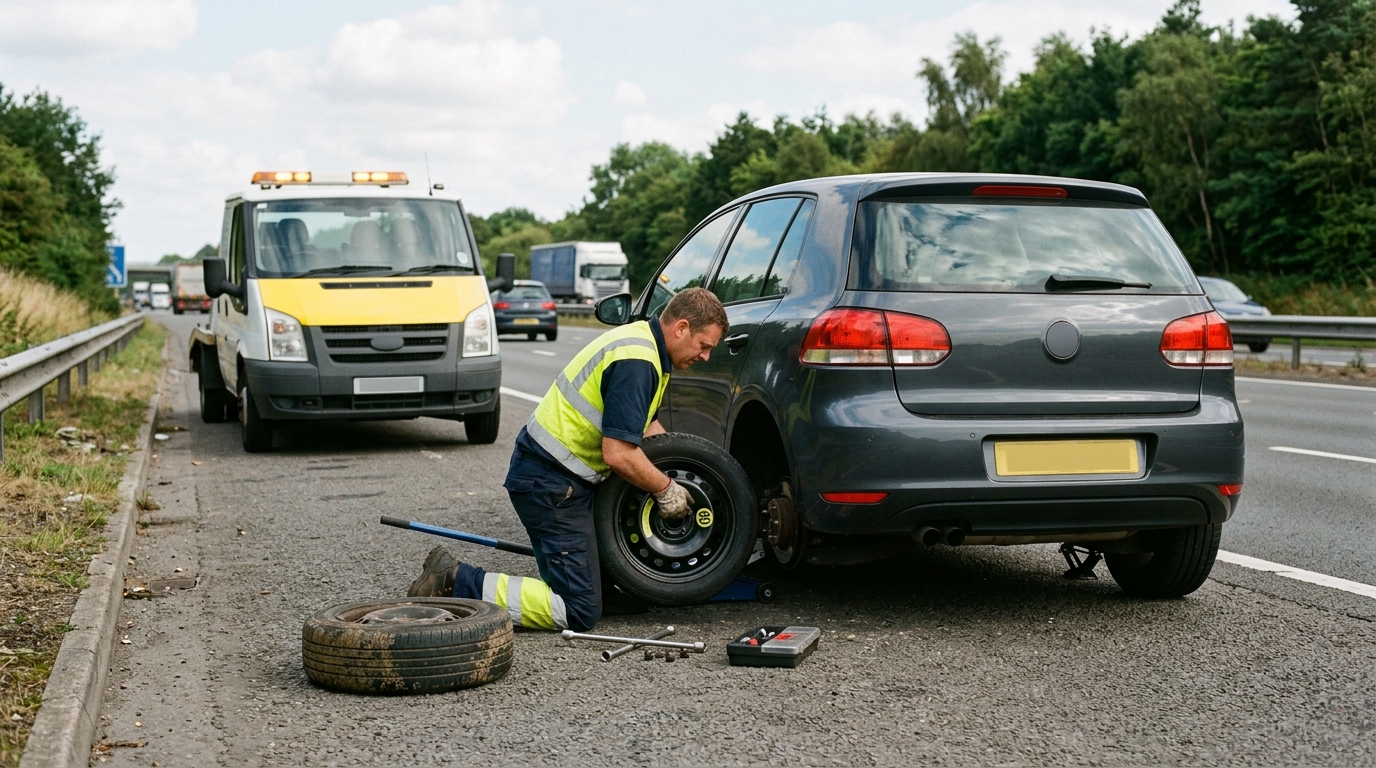
Once you are safely on the hard shoulder or inside an ERA, call for recovery assistance. MW Recovery attends motorway and road breakdowns across Greater Manchester including on the M60, M62, M56, M61, and M66. Our M60 recovery service and M62 recovery service operate 24 hours a day.
For tyre blowouts where the vehicle is otherwise undamaged and you have a serviceable spare, our team can attend and fit the spare at the roadside if conditions allow. If no spare is available or if the vehicle needs transporting, we will load it onto a flatbed and take it to a tyre centre or your preferred garage.
We also cover wheel change near you for non-motorway tyre incidents across all of Greater Manchester's towns and cities, 24 hours a day.
Preventing Tyre Blowouts
These checks significantly reduce the risk.
Check tyre pressures monthly and before any motorway journey. Use a reliable gauge rather than relying on forecourt air machines, which are often inaccurate. The correct pressures are shown inside the driver's door frame and in your vehicle handbook.
Inspect your tyres visually every week. Look for cuts, bulges on the sidewall, or embedded objects. A bulge indicates the internal structure has already begun to fail. Replace the tyre immediately rather than continuing to drive on it and hoping it holds.
Check tread depth regularly. The legal minimum in the UK is 1.6mm across the central three-quarters of the tread. At 3mm, handling and braking performance begins to deteriorate significantly in wet conditions. Most tyre professionals recommend replacing at 3mm rather than waiting for the legal minimum.
Replace tyres that are more than five years old even if they appear to have adequate tread remaining. Rubber degrades over time regardless of use. Check the date code on the sidewall: the four-digit number after DOT indicates the week and year of manufacture.
Frequently Asked Questions
What should I do first if a tyre blows out on the motorway?
Keep a firm grip on the steering wheel, do not brake hard, ease off the accelerator, and let the car slow naturally while holding your course. Once stable, signal left and move to the hard shoulder gradually. Switch on hazard lights when you stop, exit via the passenger door, move beyond the barrier, and call for help from that safe position.
Can I change a tyre on the motorway hard shoulder?
It is possible but very dangerous. The hard shoulder exposes anyone working at the side of the vehicle to passing traffic at 50 to 70mph with very little margin. Recovery services and highway authorities advise against hard shoulder tyre changes on motorways. Waiting for a recovery operator with proper equipment is the safer approach.
How fast does MW Recovery respond to motorway blowouts in Manchester?
MW Recovery aims to reach motorway incidents on the M60, M62, and M56 within 30 to 45 minutes. Response times may be longer during Bank Holidays, severe weather, or peak demand. Call 07553 322281 as soon as you are safely positioned on the hard shoulder or in an ERA.
What if my EV has a blowout and has no spare tyre?
Most electric vehicles do not come with a spare tyre. If the repair kit cannot fix the damage, the vehicle needs to be loaded onto a flatbed and taken to a tyre centre. MW Recovery carries flatbed vehicles for EV recovery. Call 07553 322281 and we will send the right vehicle for your situation.
Does a tyre blowout affect my car insurance claim?
A tyre blowout itself is generally not covered by standard comprehensive car insurance. The tyre replacement is usually your own cost. However, if the blowout causes you to have an accident, your insurance covers third-party damage and your own vehicle if you have comprehensive cover. Check your policy for the specific wording on tyre damage and blowout-related incidents.
Related Reading
- Motorway Breakdown Recovery: What To Do
- Electric Vehicle Breakdown Recovery Manchester
- Car Recovery Cost UK 2025: Full Pricing Guide
If you have had a tyre blowout on a Greater Manchester motorway or road and need recovery assistance, call MW Recovery on 07553 322281. We cover the M60, M62, M56, M61, M66, and all routes across Greater Manchester, 24 hours a day, 7 days a week.
Need Car Recovery in Manchester?
MW Recovery provides fast, professional breakdown recovery and roadside assistance across all of Greater Manchester. One call and we are on our way.